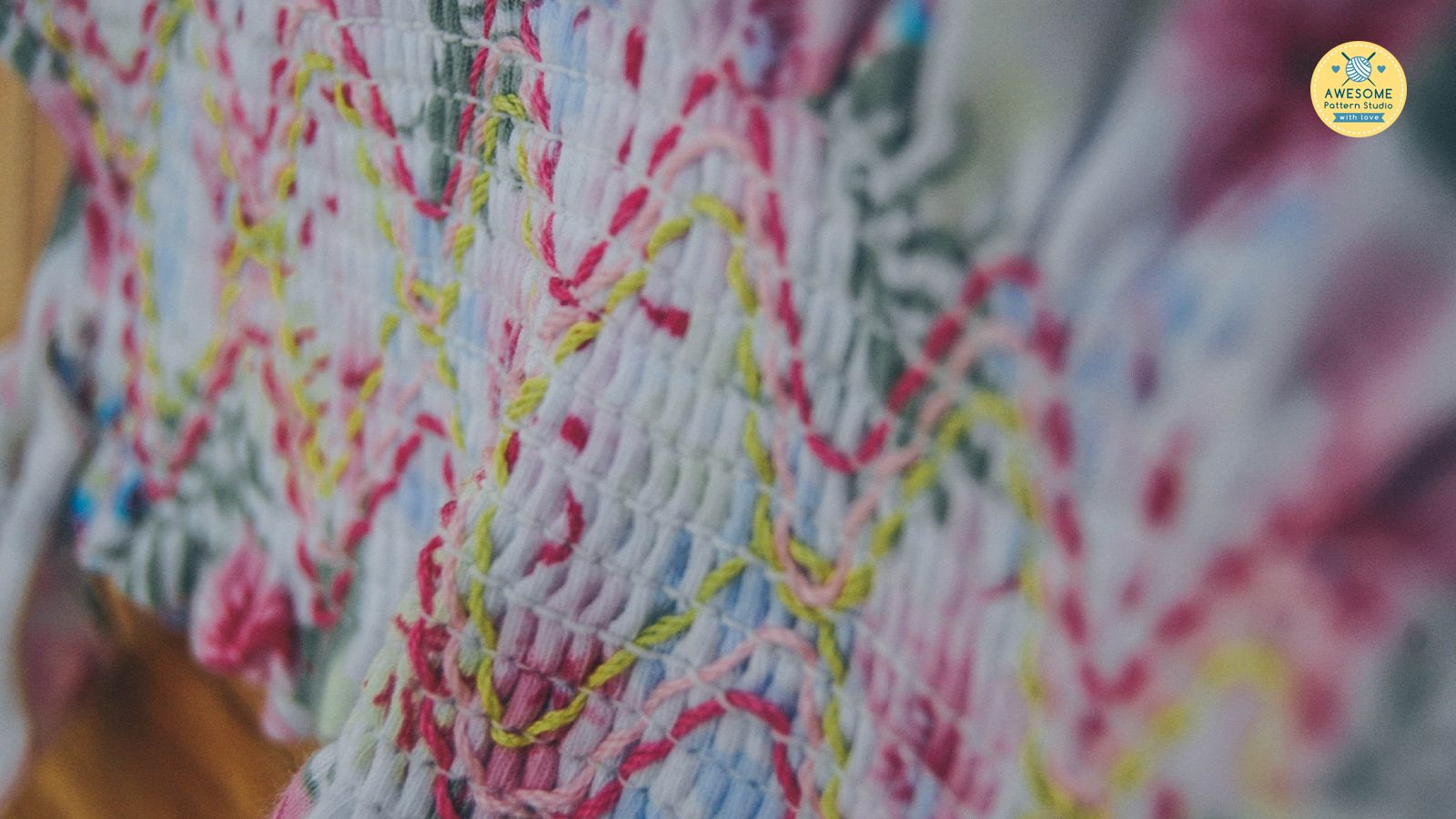

The first stitch that many people learn is the running stitch. This simple stitch is made by bringing the needle in and out of the fabric in a continuous line, creating a dashed pattern. This stitch is great for outlining shapes or outlining a design.

Another basic stitch that is perfect for beginners is the backstitch. This stitch is created by working the needle in and out of the fabric in a straight line, but taking a small step backward with each stitch. This creates a continuous line of stitches that are closely packed together, making it great for outlining or filling in designs.

Another useful stitch for beginners is the stem stitch. The stem stitch is similar to the backstitch, but it's worked slightly differently. Instead of taking a step backward with each stitch, the needle is brought out at a slight angle, creating a slightly curved line of stitches. This stitch is perfect for outlining curved shapes or creating text.

The satin stitch is a versatile embroidery stitch that can be used to fill in large areas of a design. This stitch is made by bringing the needle out of the fabric and then pushing it back a short distance away. The thread is then brought back up to the surface of the fabric again, and the process is repeated.

French knots are small knots that are used to add texture and interest to a design. These knots are made by bringing the needle out of the fabric and wrapping the thread around the needle a few times before pushing the needle back into the fabric in the same spot.

One of the most popular and versatile hand embroidery stitches is the chain stitch. This stitch is made by bringing the needle out of the fabric, and then pulling the thread through. The needle is then brought back into the fabric a short distance away, and the thread is pulled through again. The needle is then brought out again a short distance away, and the process is repeated.

Another common hand embroidery stitch is the cross-stitch. It's often used to create intricate patterns and designs. A cross stitch is made by bringing the needle out of the fabric at the lower left corner of a small square. The needle is then brought back into the fabric at the upper right corner of the square. The process is then repeated to create a diagonal cross.

Finally, Blanket Stitch is a decorative stitch that can be used to edge or finish a fabric or a garment. The blanket stitch is created by working a straight stitch and then bringing the needle out of the fabric and over the thread of the previous stitch, before bringing it back into the fabric again.

In conclusion, these are just a few of the many hand-embroidery stitches that are perfect for beginners. Each of these stitches has its own unique characteristics and uses, and with practice and experimentation, you can master them all. Hand embroidery is a wonderful hobby that can be both relaxing and rewarding, and learning these basic stitches is a great place to start.
HAND EMBROIDERY STITCHES FOR BEGINNERS
Hand embroidery is a beautiful and timeless craft that has been passed down through generations. Whether you're just starting out or looking to brush up on your skills, learning the basics of hand embroidery stitches is a great place to begin. In this article, we'll take a look at some of the most popular and versatile stitches that are perfect for beginners.