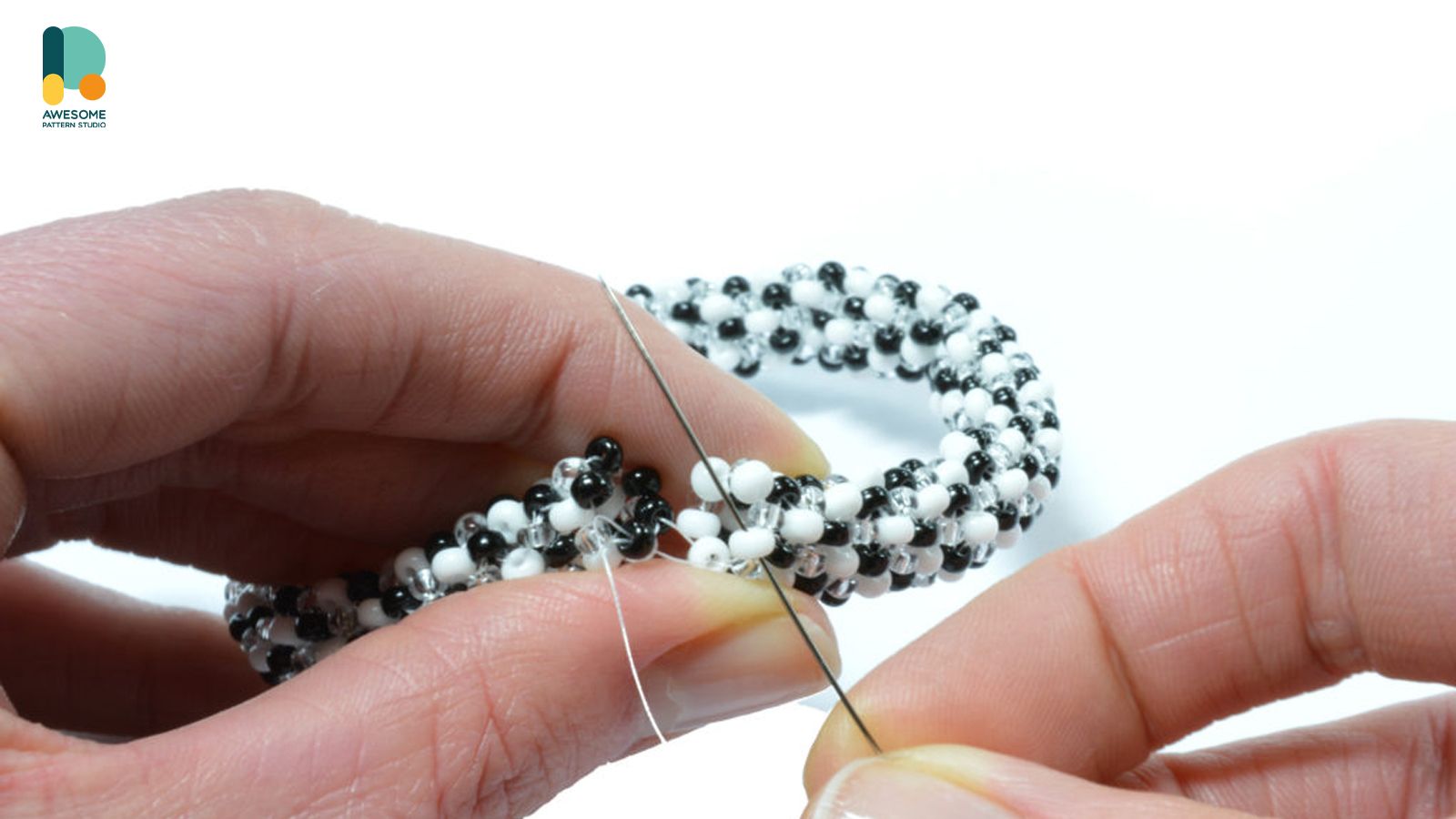

The ladder stitch is one of the most basic stitches used in beadwork. It involves creating a series of parallel rows of beads, which can be used to create bracelets, necklaces, or even beaded amulet bags. To create the ladder stitch, start by threading a needle and tying a knot at the end. Then, add two beads to the needle and thread and pass the needle back through the second bead to create a loop. Continue adding pairs of beads and looping back through the second bead until you have the desired length.
The brick stitch is similar to the ladder stitch but involves staggering the rows of beads to create a brick-like pattern. It is a versatile stitch that can be used to create everything from earrings to beaded animals. To create the brick stitch, start by creating a ladder stitch. Then, add a bead to the thread and pass the needle through the second bead in the previous row. Continue adding beads and passing the needle through the second bead in the previous row until you have the desired length.
The peyote stitch, also known as the gourd stitch, is a versatile stitch that can be used to create flat or three-dimensional beaded items. It is a bit more complex than the ladder or brick stitch but can be easily mastered with practice. To create the peyote stitch, start by creating a ladder stitch. Then, add a bead to the thread and pass the needle under the thread bridge between the two beads in the previous row. Continue adding beads and passing the needle under the thread bridge until you have the desired length.
The herringbone stitch, also known as the Ndebele stitch, is a popular stitch for creating beaded ropes and straps. It creates a zigzag pattern that resembles the bones of a fish. To create the herringbone stitch, start by adding two beads to the needle and thread and passing the needle back through the first bead to create a loop. Then, add two more beads and pass the needle through the second bead in the previous row. Continue adding beads and passing the needle through the second bead in the previous row until you have the desired length.
The square stitch is a versatile stitch that can be used to create flat or three-dimensional beaded items. It involves creating a series of squares with beads that are woven together. To create the square stitch, start by creating a ladder stitch. Then, add two beads to the needle and thread and pass the needle through the second bead to create a loop. Add two more beads and pass the needle through the second bead in the previous row. Continue adding beads and passing the needle through the second bead in the previous row until you have the desired length.
In conclusion, these are just a few of the basic beading stitches that you can use to create a variety of beautiful beaded items. Once you have mastered these stitches, you can experiment with different bead sizes, colors, and patterns to create unique and personalized pieces. Whether you are a beginner or an experienced beader, these stitches will provide a solid foundation for your beading skills.
INTRODUCTION TO BASIC BEADING STITCHES
Beading is an enjoyable and creative hobby that allows you to make beautiful jewelry, accessories, and decorations. While beading can seem daunting at first, mastering a few basic stitches can open up a world of possibilities. In this article, we will introduce you to some of the most common and versatile beading stitches.