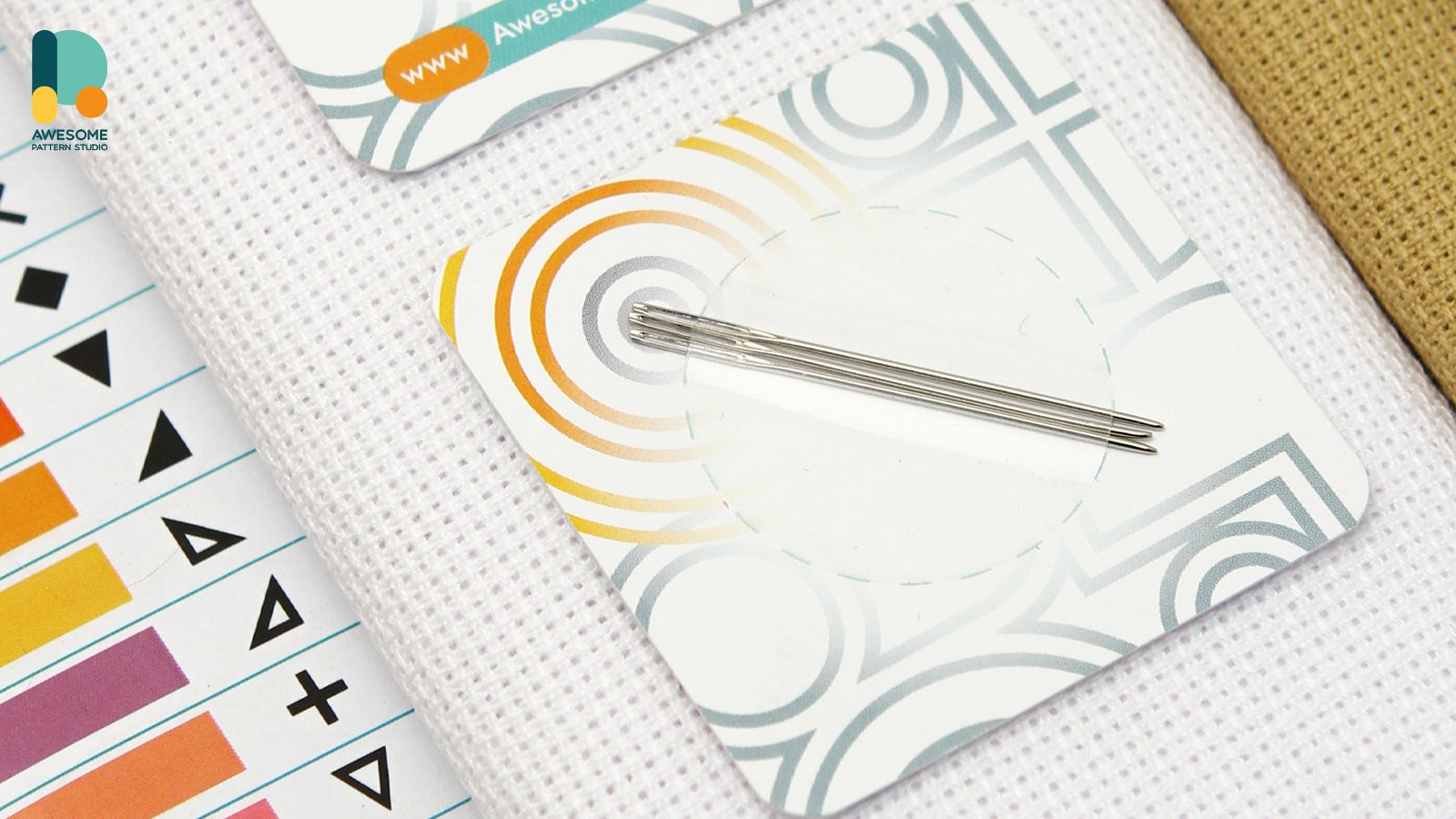
Tapestry needles are the most commonly used cross stitch needles. They are blunt-tipped, making them ideal for stitching through even-weave fabrics such as Aida or linen. Tapestry needles come in different sizes, ranging from 18 to 28, with the larger numbers being thinner and better suited to finer fabrics.

Chenille needles have a long, thick, and sharp point, making them ideal for stitching through thick and heavy fabrics such as burlap or canvas. They have a large eye that can accommodate thick threads or yarn, making them popular for embroidery projects that require a more textured or three-dimensional effect.

As the name suggests, beading needles are specially designed for attaching beads and sequins to embroidery projects. They are long and thin with a narrow eye, making them ideal for threading through tiny beads. Beading needles come in various sizes, and it is important to choose the right size for the type and size of bead you are using.

Milliners needles, also known as straw needles, are long, thin needles with a small, round eye. They are commonly used for ribbon embroidery, attaching lace, and creating French knots. Milliners needles are also ideal for stitching through thick fabrics such as velvet and corduroy.

Sharp needles, also known as crewel needles, have a sharp point and a small eye. They are perfect for stitching through delicate fabrics such as silk or organza. Sharp needles come in various sizes, with the larger numbers being thinner and better suited for finer fabrics.

Tapestry Petites are shorter and thinner than regular tapestry needles, making them ideal for stitching through tighter weave fabrics such as even-weave cotton or linen. They are also perfect for stitching small details and intricate designs.

In conclusion, the type of cross stitch needle you choose will depend on the type of fabric and thread you are using, as well as the design you are creating. By understanding the different types of cross stitch needles available, you can choose the right needle for your project, ensuring that your embroidery looks beautiful and professional.
TYPES OF CROSS STITCH NEEDLES
Cross stitch is a popular embroidery technique that requires specific types of needles to create beautiful and intricate designs. Cross stitch needles come in different shapes, sizes, and materials, each designed to suit different stitching techniques and fabrics. In this article, we will explore the different types of cross stitch needles and their uses.