


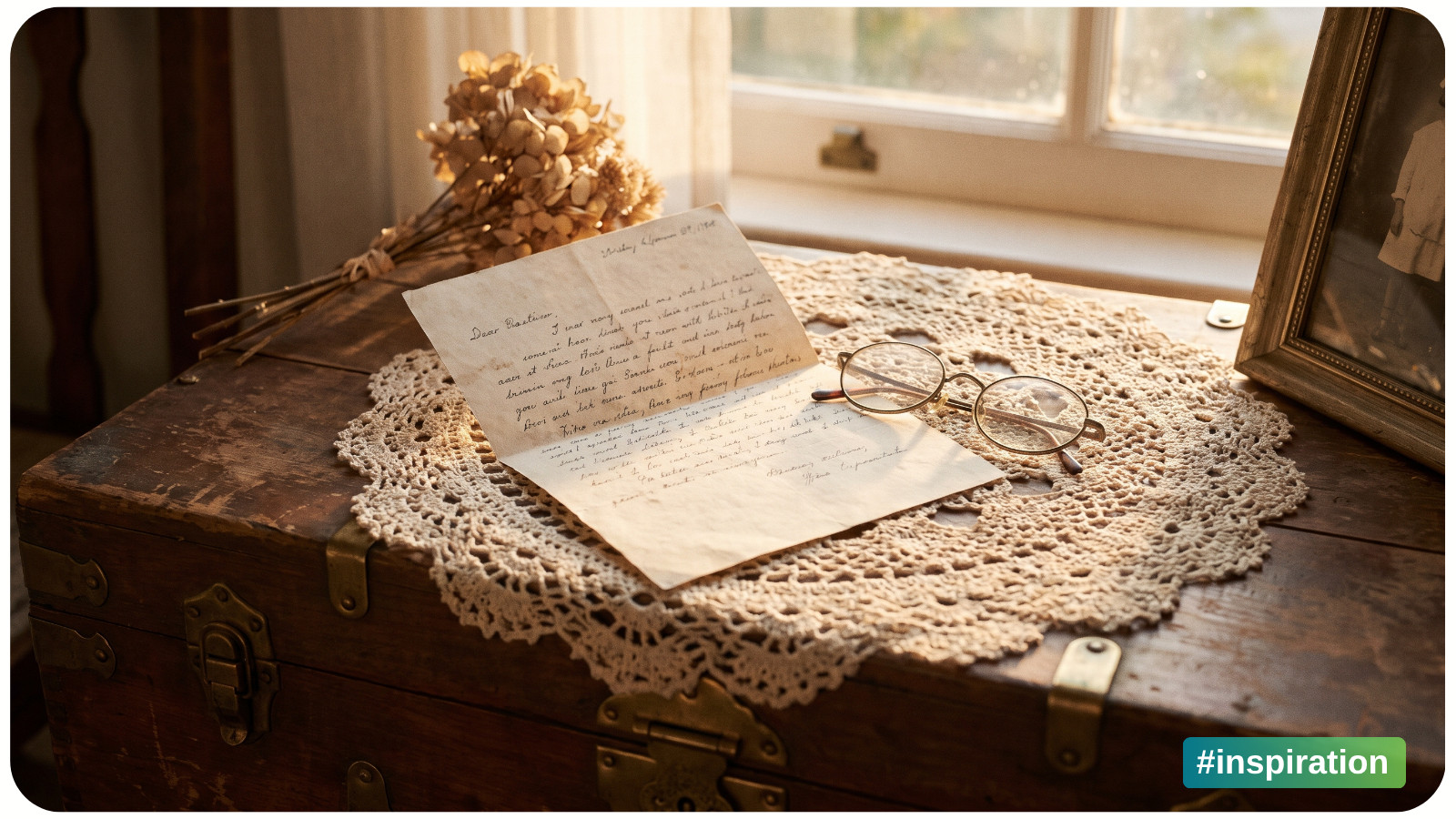
A hand-sewn apron hangs behind the kitchen door. A stitched ornament comes out every December. A wooden box still holds buttons nobody remembers buying. These objects may look ordinary, yet each can carry a part of a family's story.
Handmade heirlooms are objects made by hand, kept for their personal meaning, and passed from one generation to another. Their meaning can come from the maker, the occasion, everyday use, or the stories told around them. You can also make a new keepsake today with the hope that someone will treasure it later.
To preserve that connection, record what is known, keep the story with the object, and choose care that suits its materials and condition. The useful question is simple: what would a future family member need to know to understand why this object matters?
What Makes a Handmade Object a Family Heirloom?
An heirloom does not need to be expensive or belong in a museum. A small embroidered handkerchief can matter more to a family than an elaborate piece bought without a personal connection.
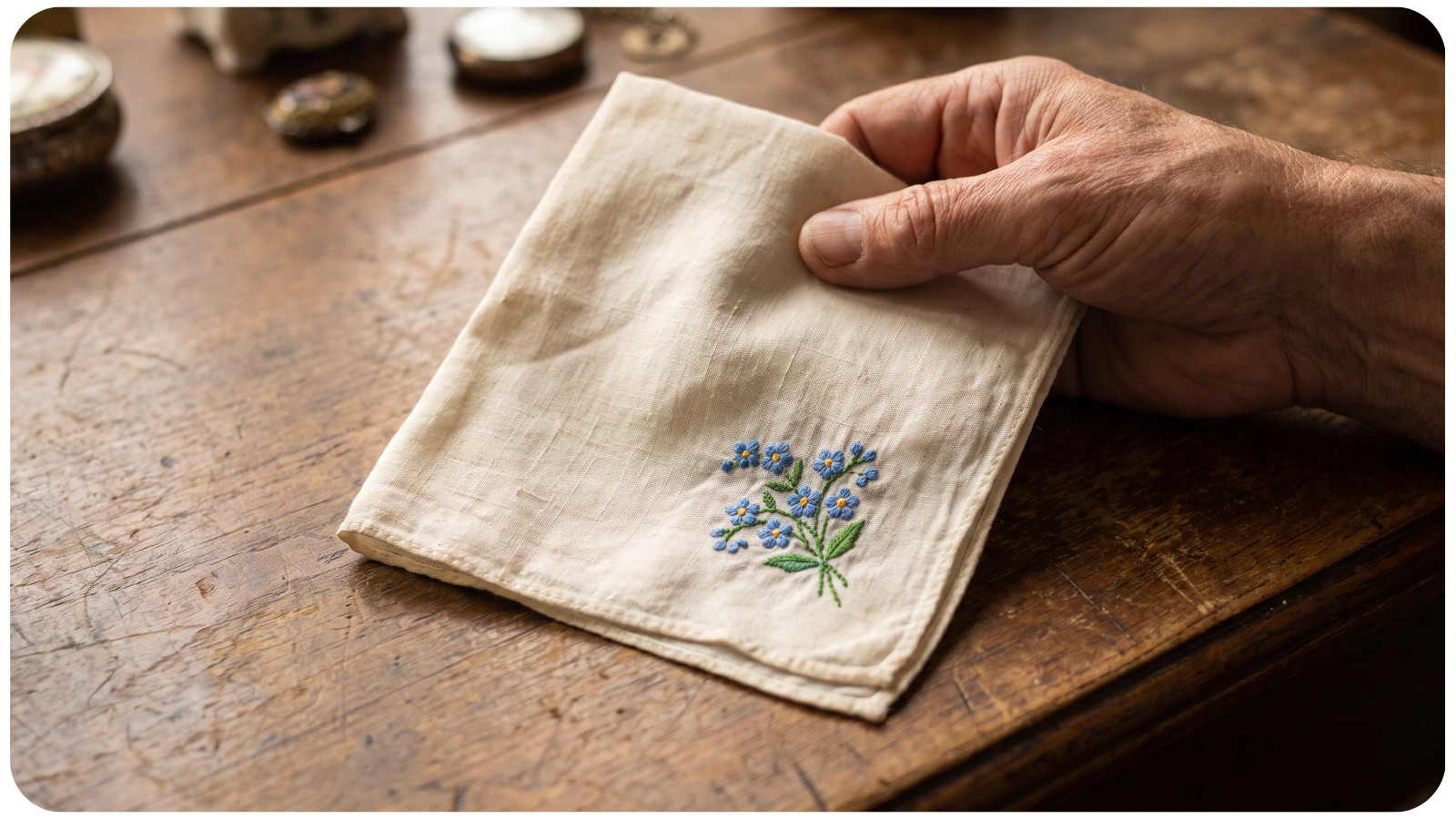
A maker's name, a remembered routine, and a chain of people who cared for the object can all give it meaning. An apron might recall the person who wore it while teaching children to bake. A carved toy might connect a child with a grandparent they never met.
Being handmade, though, does not guarantee that an object will become an heirloom. Keeping it and passing it on gives that possibility a future. Its full history may be unknown, but recording what you do know helps the next person understand its place in the family.
The Smithsonian's Family Treasures Toolkit offers a helpful starting point: family treasures are objects that hold special meaning and tell stories about a family's experiences. That leaves room for humble, useful things alongside formal gifts.
Everyday Use Gives an Object a Story
Imagine a quilt made from clothes that family members once wore. Without any background, it is a patchwork of colors. With the story, one square becomes a school shirt, another a favorite dress, and another a reminder of a person who sewed at the kitchen table.
This is more than a possible example. In a Library of Congress article about quilts and family history, Katie McCarthy recalls a quilt her grandmother made from her mother's old shirts and sweatshirts. The same article draws on recorded interviews with quiltmakers who learned from relatives and shared their skills with younger generations.
For your own family, look for the link between an object and a repeated activity. Was the embroidered cloth brought out for birthdays? Did a handmade box travel through several house moves? Who always hung the felt decorations?
These details give a future owner something specific to picture. Saying that a table runner was used at every Sunday lunch tells more than calling it precious.
What Stitches and Repairs Can Tell You
A name, date, or set of initials can help you research a piece of needlework, although a stitched name alone does not prove who made it. A repair may show that someone wanted to keep using it. An unfinished corner can raise questions about the maker's plans.
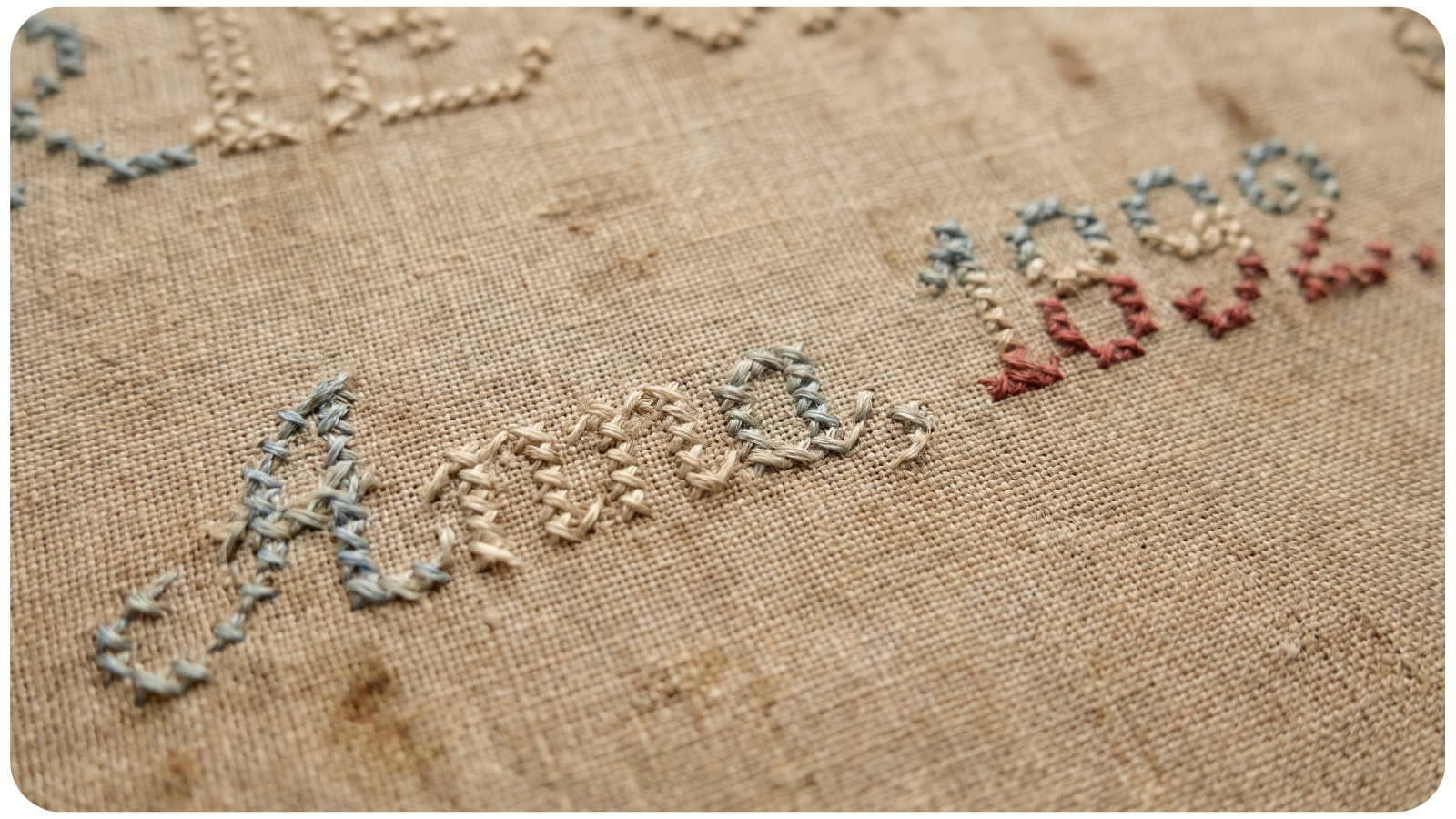
Still, the object cannot answer every question by itself. A faded thread does not tell you exactly how old a piece is. An uneven border does not prove that a child made it. A familiar flower may come from a printed pattern rather than a family design.
Treat visible details as a reason to ask questions. If you want to explore how names and personal details appear in needlework, The Art of the Sampler: How Needlework Recorded Women's Lives offers a historical companion to this subject.
When the answer is uncertain, record that uncertainty. “Believed to have been made by Aunt Helen” is more useful than a confident claim that later turns out to be wrong.
Record the Story While Someone Can Tell It
You do not need a complete family tree to begin. Choose one object and talk with someone who remembers it. The Smithsonian's oral history guide recommends open-ended questions, close listening, and respect for the person sharing their memories.
Try asking:
• Who made this, and who taught them the skill?
• Was it made for a particular person or occasion?
• Where was it kept, displayed, or used?
• What do you remember happening around it?
• Has anyone repaired or changed it?
• Which details are you sure about, and which were told to you by someone else?
Ask permission before recording, and agree on who may hear or see the recording. A short conversation can be enough to capture a useful memory. Leave room for an unexpected answer instead of trying to steer the story toward a neat ending.
If relatives remember different versions, keep both and name the source of each. Family history can include gaps and disagreements without losing its value.
Give Each Heirloom a Simple Story Card
A written note helps keep an object's history attached to it when memories fade or belongings change hands. Photograph the whole piece and important details, then create a paper and digital record with matching filenames.
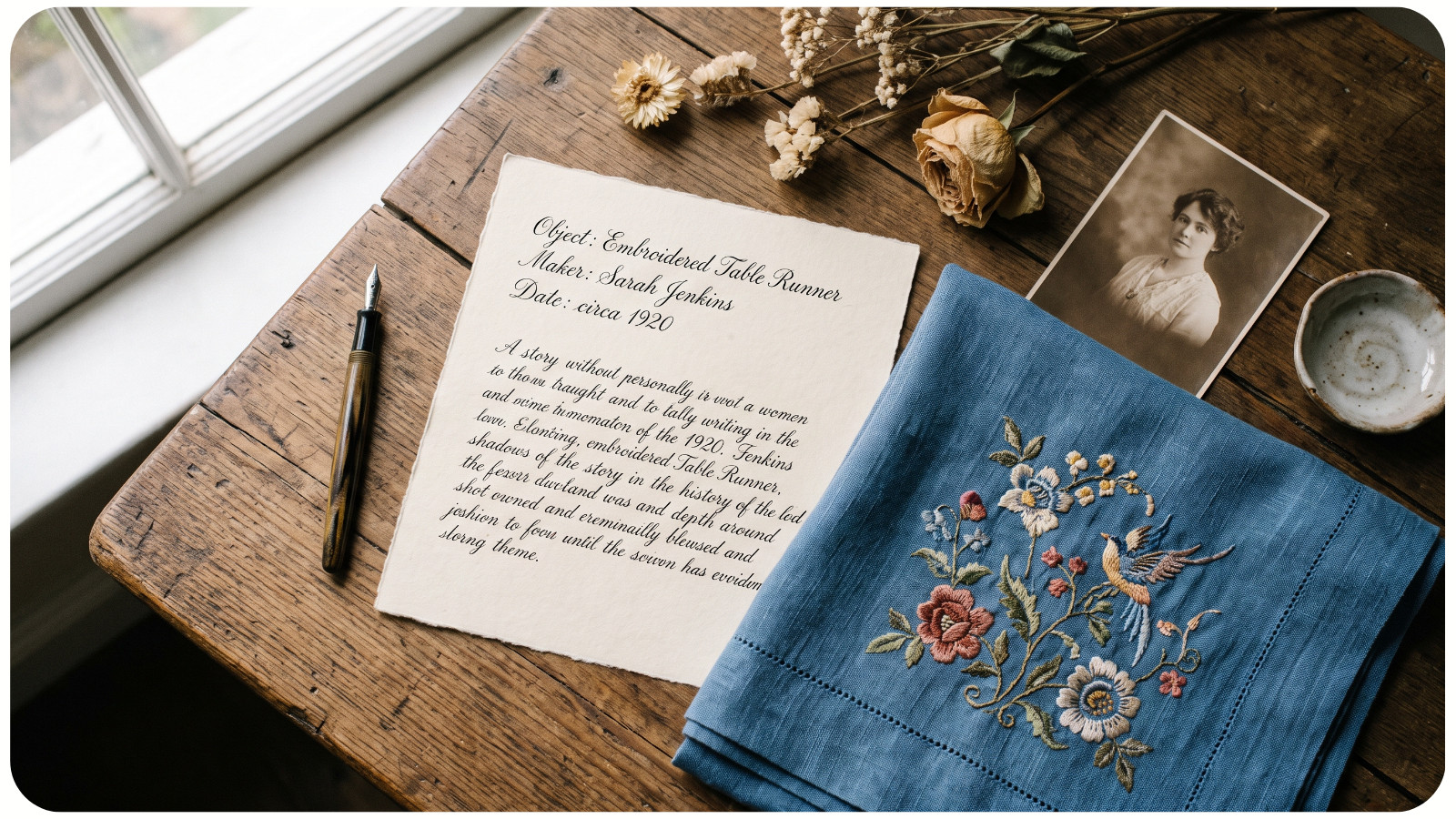
Include the object's name, maker, approximate date, materials if known, original purpose, later owners, and the source of the information. Add any known repairs and suitable care guidance. Use full names where possible, since “Grandma's quilt” can become unclear after several generations.
Here is a fictional example of a useful record:
• Object: Blue embroidered table runner.
• Maker: Helen Carter, according to her daughter June.
• Date: Probably the late 1970s.
• Family use: Sunday lunches at the house on Maple Street.
• Changes: One edge repaired by June in 2008.
• Recorded by: Alex Carter, October 2026.
• Still unknown: The fabric type and pattern source.
Keep the card with the storage box or in a clearly linked folder. Avoid sticking labels or tape directly onto an older textile. Back up the digital photographs and notes in a separate location so one lost phone does not take the record with it.
Preserve Handmade Heirlooms According to Their Condition
Keeping an object safe and continuing to use it are related choices, but they can lead to different decisions. A sturdy modern quilt intended for use may stay on a bed. A fragile inherited textile may need supported storage and only occasional viewing.
The Library of Congress preservation guidance emphasizes suitable storage, surroundings, and handling as the foundation of care. For family textiles, the Smithsonian toolkit recommends clean hands, protection from light, and storage away from the changing heat and damp often found in attics and basements.
For stored family textiles, choose archival acid-free boxes and unbuffered acid-free tissue suited to the piece. Avoid forcing a textile into a small box or making tight folds. Where folding is necessary and the piece can tolerate it, soft rolls of tissue can support the folds. Remove jewelry that could catch the fabric, and support the whole piece while moving it.
Cleaning needs more judgment. An older quilt or embroidered cloth may have weak fabric, unknown dyes, or mixed materials. Consult a textile conservator before washing or repairing a fragile, damaged, or especially important piece. Do not assume that a routine used for new stitching is safe for an inherited object.
If you want to enjoy a vulnerable piece every day, display a photograph or make a clearly identified new version. Record any work done to the original so future owners know what changed.
Make New Keepsakes That Fit Your Family's Life
A future heirloom can begin with a small project. Consider a stitched ornament linked to a memorable year, a sewn pouch for a child's favorite treasures, or a handmade book containing family recipes and the names of the people who shared them. If Christmas decorating is part of your family story, holiday cross-stitch patterns can be a starting point for a new seasonal keepsake.
Choose something the recipient will enjoy using or seeing. For a first stitched keepsake, this introduction to cross-stitch patterns for beginners can help you explore the craft. Give yourself room to choose a manageable project with a personal subject. Add your name, the date, and a brief explanation, either safely on a new piece or in a separate note.
You can also pass on the making itself. Invite someone to choose colors, learn a stitch, or help plan the design. Record each person's contribution. The shared afternoon may become part of the object's history.
Leave the recipient room to decide what to keep. A handmade gift should not become a duty to preserve every stitch forever. If your family has few surviving objects, you can begin with present-day memories, photographs, and new work.
Start with one thing you already own. Photograph it, ask one question about it, and write down the answer with the speaker's name. That small record gives the next person a way to see more than fabric, thread, or wood. It gives them a person, a place, and a story they can carry forward.