


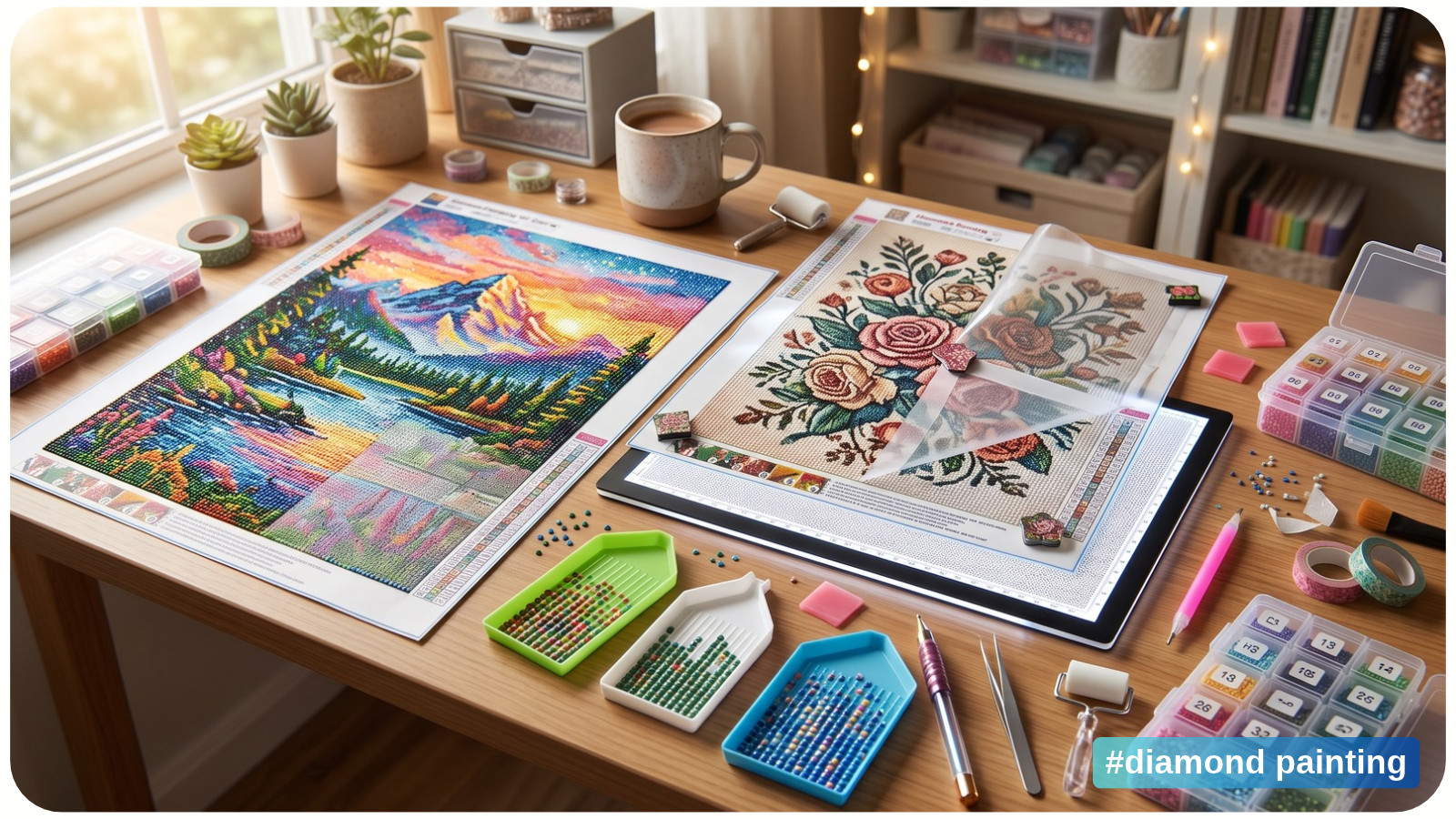
Choose a diamond painting canvas size by checking the finished design preview, how much of the picture the main subject fills, and the actual picture dimensions. For a first project, a simple design around 30 × 40 cm can be a useful starting point. Detailed faces, lettering, and busy scenes may need more room, but no measurement guarantees a clear result.
Why Canvas Size Changes the Detail
Diamond painting builds an image from small faceted pieces called drills. Each position on the canvas grid holds one drill in one color, much like a pixel in a digital image.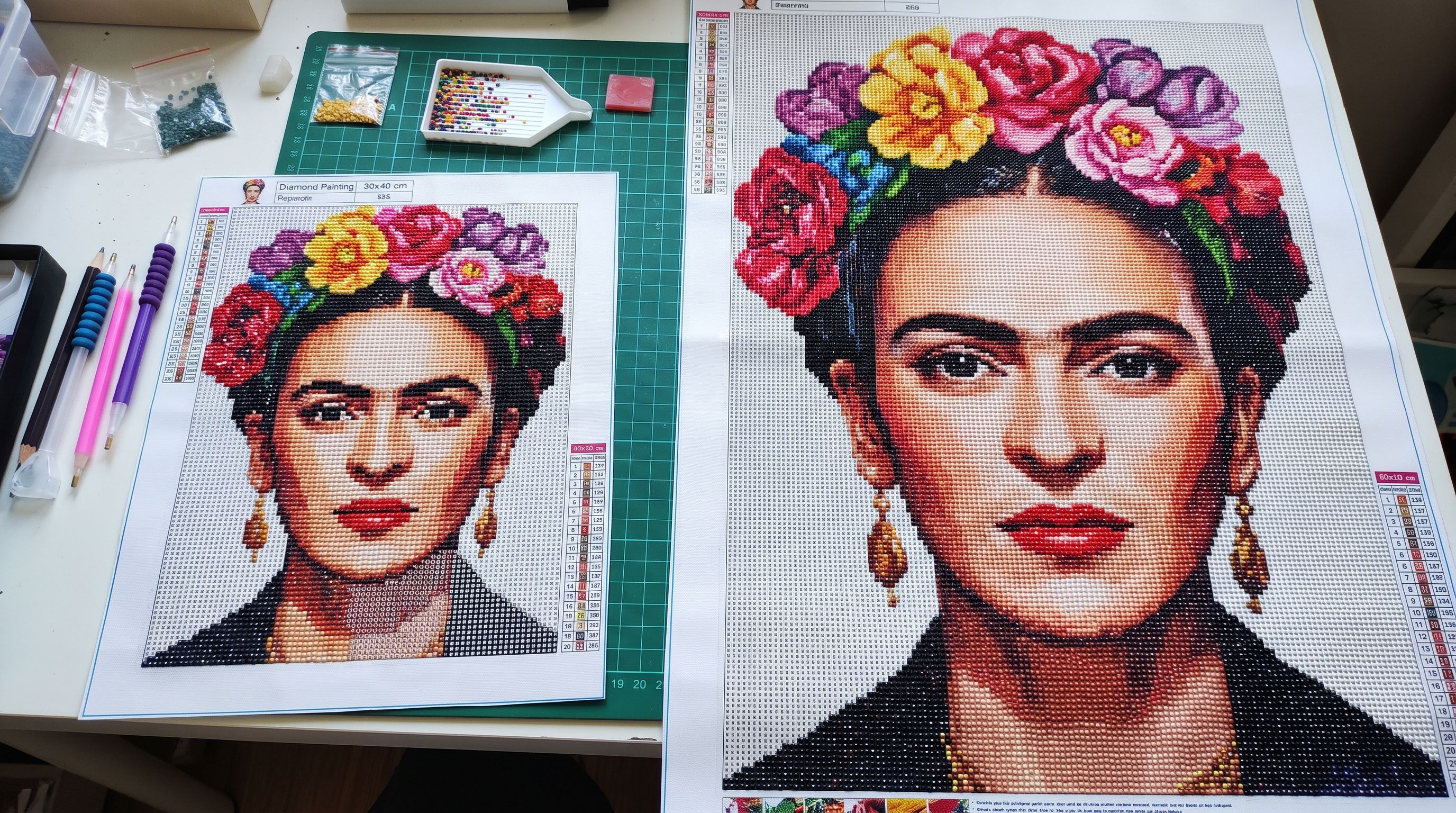
When the same composition is charted at a larger size with the same grid spacing, it has more positions for shapes and shading. A curve can use more steps, and an eye has more room to stand apart from the surrounding face.
Rendering, the process of turning artwork into a drill-by-drill chart, also matters. Extra space gives the designer room to refine details. A larger chart can still have awkward color choices or unclear features.
Consider a hypothetical design on a grid with 2.5 mm spacing. A face measuring 2 cm across has eight drill positions across its width. At 6 cm, it has 24. Those extra positions give the chart more room to distinguish eyes, cheeks, and a mouth. This example explains grid geometry. It is not a minimum size rule for portraits.
Check Picture Size Before Comparing Kits
A listing's dimensions may describe the picture area or the entire canvas, including its border. Some manufacturers list design size and fabric size separately.
Before comparing two kits, check:
• Picture or design size: the dimensions of the artwork.
• Total canvas size: the full material, including borders and any printed key.
• Coverage: whether drills cover the whole picture or selected areas.
A full-drill kit covers the picture area with drills. A partial-drill kit leaves some areas as printed artwork. Fine printed details in those areas do not show how much detail the drilled sections can hold.
If the measurements are unclear, ask the seller: "What are the dimensions of the actual picture, excluding the border?"
Match the Size to the Subject
The amount of grid space available for an important feature matters as much as the overall dimensions.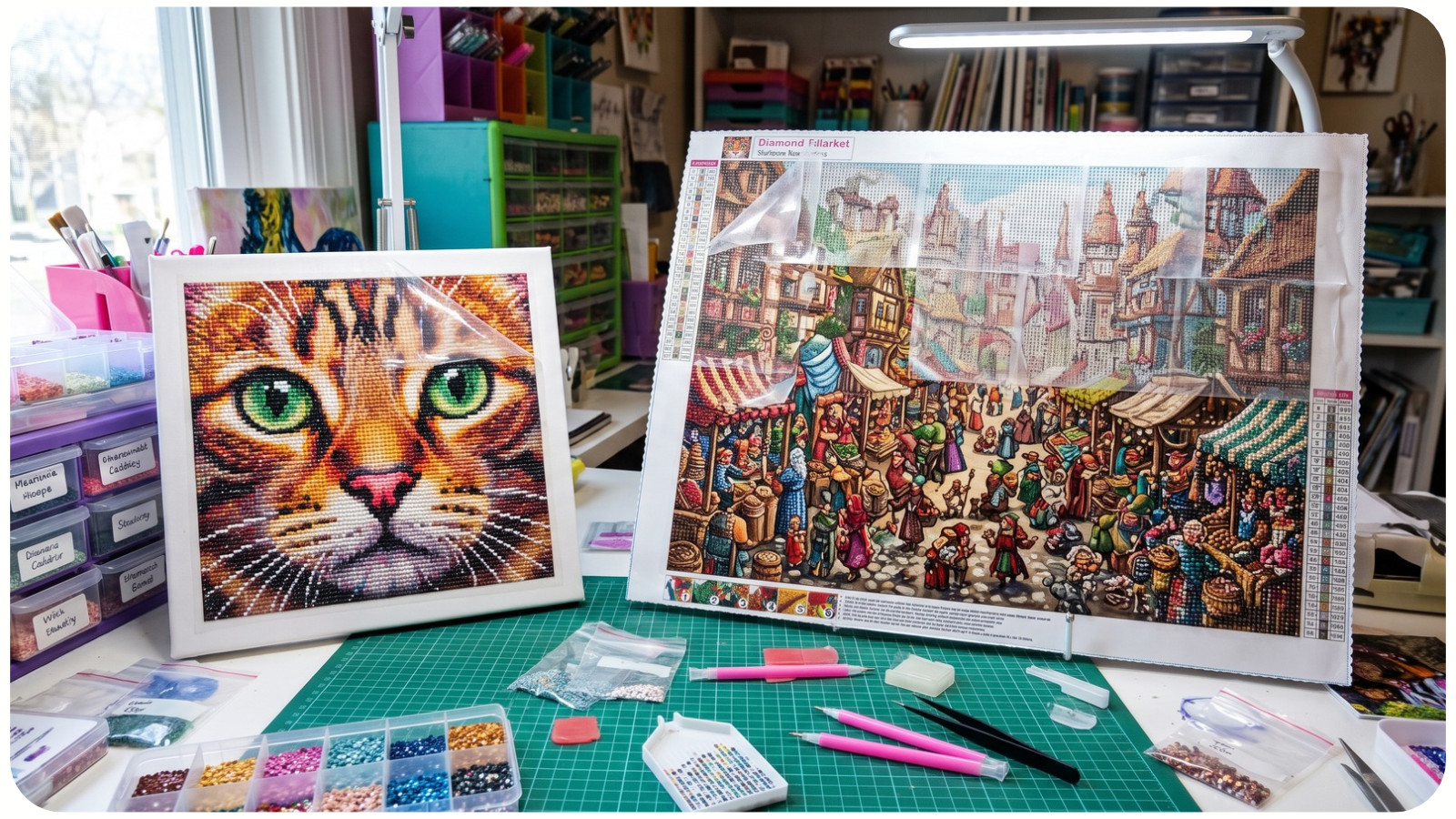
Large, Simple Subjects Can Work on Smaller Canvases
Look for one clear focal point, distinct outlines, and areas of contrasting color. A close-up flower, a bold geometric motif, or a single animal filling most of the picture can suit a manageable first project.
For example, a cat's face that fills the canvas has more grid space for its features than a small cat at the far end of a garden. When browsing flower and plant diamond painting designs, apply the same check to the petals and leaves you want to see clearly.
Inspect Small Faces, Fine Lines, and Crowded Scenes
Several people, distant animals, narrow branches, tiny buildings, and text must all share the available grid. Check the features that matter most to you.
With a group portrait, inspect each face separately. With lettering, check whether you can read the words in the charted preview. Knowing the intended message from the original artwork can make unclear letters seem more readable than they are.
If an important feature looks unclear, compare a larger version if one exists. Otherwise, choose a composition with a larger focal subject. A different design may fit your plans better than a much larger canvas.
A Diamond Painting Canvas Size Guide for Beginners
These dimensions are shopping starting points. They assume picture dimensions and conventional drills. Use the matching preview to judge whether an individual design works. The sizes are not technical standards or promises of detail.
Picture size | Approximate inches | When to consider it |
|---|---|---|
20 × 30 cm | 7.9 × 11.8 in | Trying a simple design with one bold subject |
30 × 40 cm | 11.8 × 15.7 in | A first canvas with a clear focal point and limited background detail |
40 × 50 cm | 15.7 × 19.7 in | Giving shading and secondary elements more room |
50 × 70 cm or larger | 19.7 × 27.6 in or larger | Considering a complex composition when you want a longer project |
These formats have different proportions. They are not interchangeable versions of every image, so check whether changing the size also changes the crop.
Start with the amount of work you want, then look for artwork that suits that format. A well-rendered small design can be more satisfying than a large scene chosen only for its detail.
Inspect the Preview Before You Buy
The original illustration shows the source artwork. A rendered preview shows how it has been translated into the diamond painting grid. A clear photo of the completed kit offers another useful check.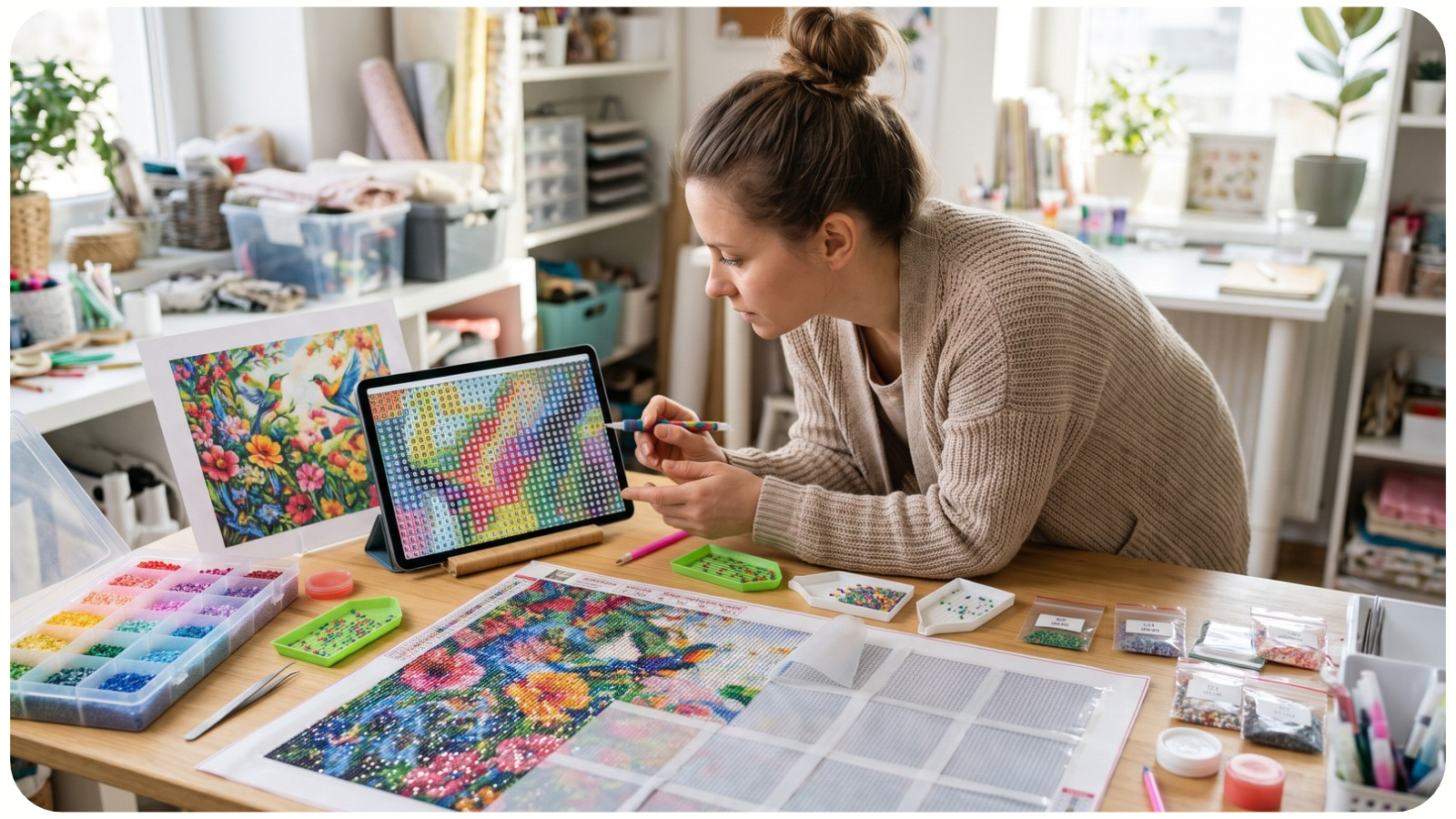
Before ordering:
1. Confirm the version. Look for a preview or finished photo matching your chosen size and drill shape.
2. Find three details you care about, such as an animal's eyes, flower petals, and a small window.
3. Inspect those details closely. Are they distinct, or have neighboring shapes merged?
4. View the whole picture at a comfortable distance. Does the subject read clearly without the original image beside it?
Visible blocks up close are part of the mosaic effect. Judge whether the picture communicates what you want. A diamond painting will have a different texture from a smooth photograph.
If the listing only shows original artwork, request a rendered preview or completed photo. A choice of several dimensions does not tell you which version preserves the features you love.
How Round and Square Drills Affect Your Choice
Round drills leave small spaces between neighboring pieces. Square drills are designed to meet edge to edge. Both shapes can suit beginners.
Conventional square drills are often smaller than conventional round drills. When the matching canvas grid has finer spacing, it can hold more drill positions within the same picture dimensions. Check the kit specifications because drill sizes and grid spacing vary.
A finer grid can help preserve detail, but drill shape alone does not guarantee a clearer picture. Rounds need no rotational alignment. Squares need their edges aligned with the grid. Our guide to gaps between diamond painting drills explains how to recognize normal spacing.
Some specialty kits use smaller drills. Two equally sized pictures can therefore contain different amounts of detail. Compare the rendering and grid information instead of assuming every kit follows the same scale.
Balance Detail With the Work Involved
Before sizing up, measure your working area and decide where the project will go between sessions. Leave room for the canvas borders, tray, and drill containers. You should be able to reach the active section comfortably.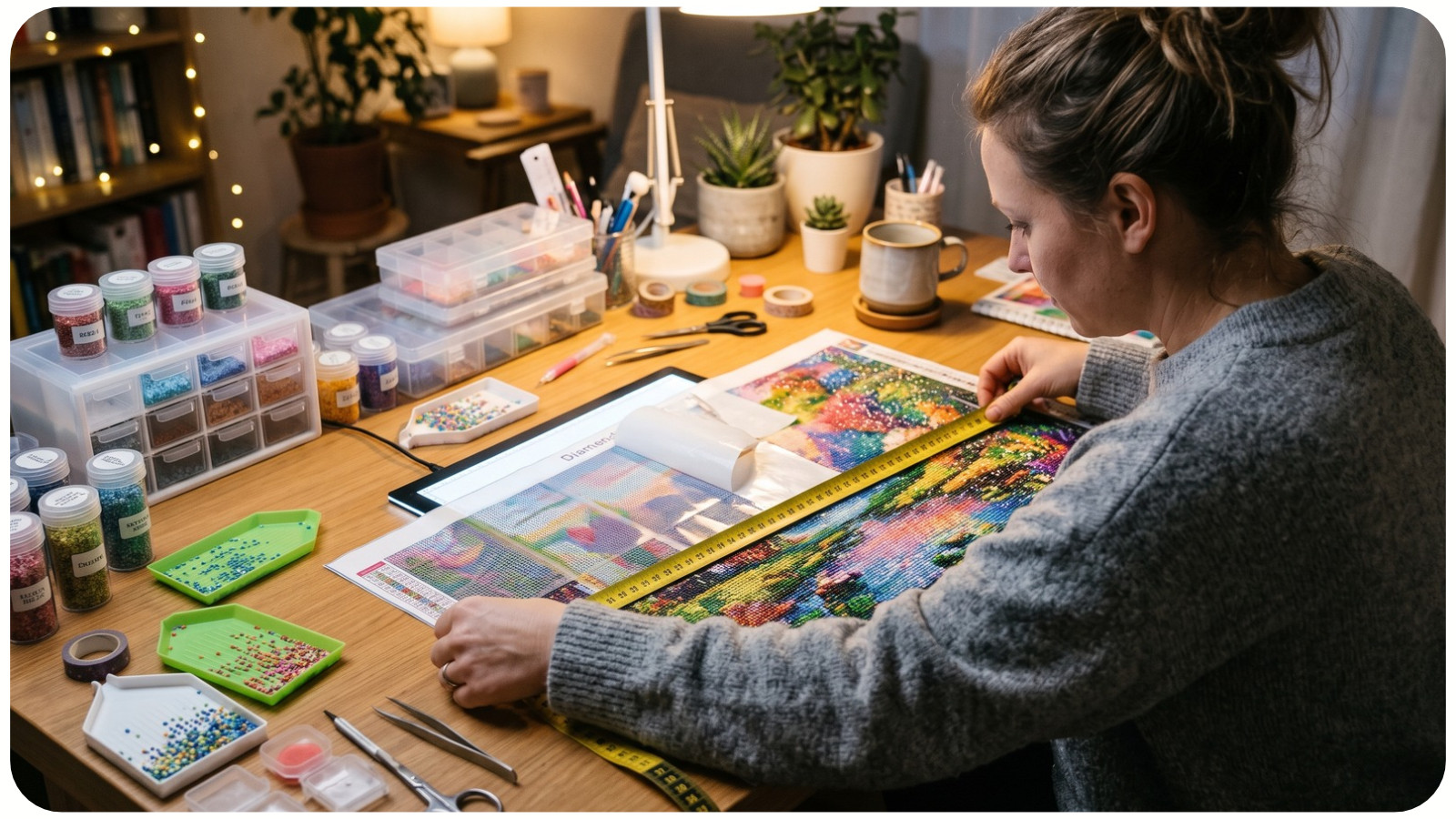
Check the display space, too. Metric dimensions are not exact matches for similarly named inch-based frames: 40 × 50 cm is approximately 15.7 × 19.7 inches. Measure the finished artwork and check the frame opening before purchasing a frame.
Size also changes the number of placements. Enlarging a full-drill picture from 30 × 40 cm to 45 × 60 cm increases its area to 2.25 times the original. With the same grid spacing, it requires roughly 2.25 times as many drills. Completion time will also depend on color changes and your pace.
Avoid choosing by color count alone. More shades cannot compensate for too few grid positions to describe a feature. Look at how those colors are arranged, too. Frequent color changes can make even a modest canvas take patience.
Choose a Size That Keeps the Details You Love
Pick the details you would miss if they disappeared. Confirm the picture dimensions, inspect those features in the matching preview, and check that the project fits your space and the time you want to spend.
If the details remain clear, you have a sensible size to start with. If they do not, compare a larger rendering or choose a simpler composition. As you browse APS diamond painting kits, use the preview and listed specifications to guide your choice.