


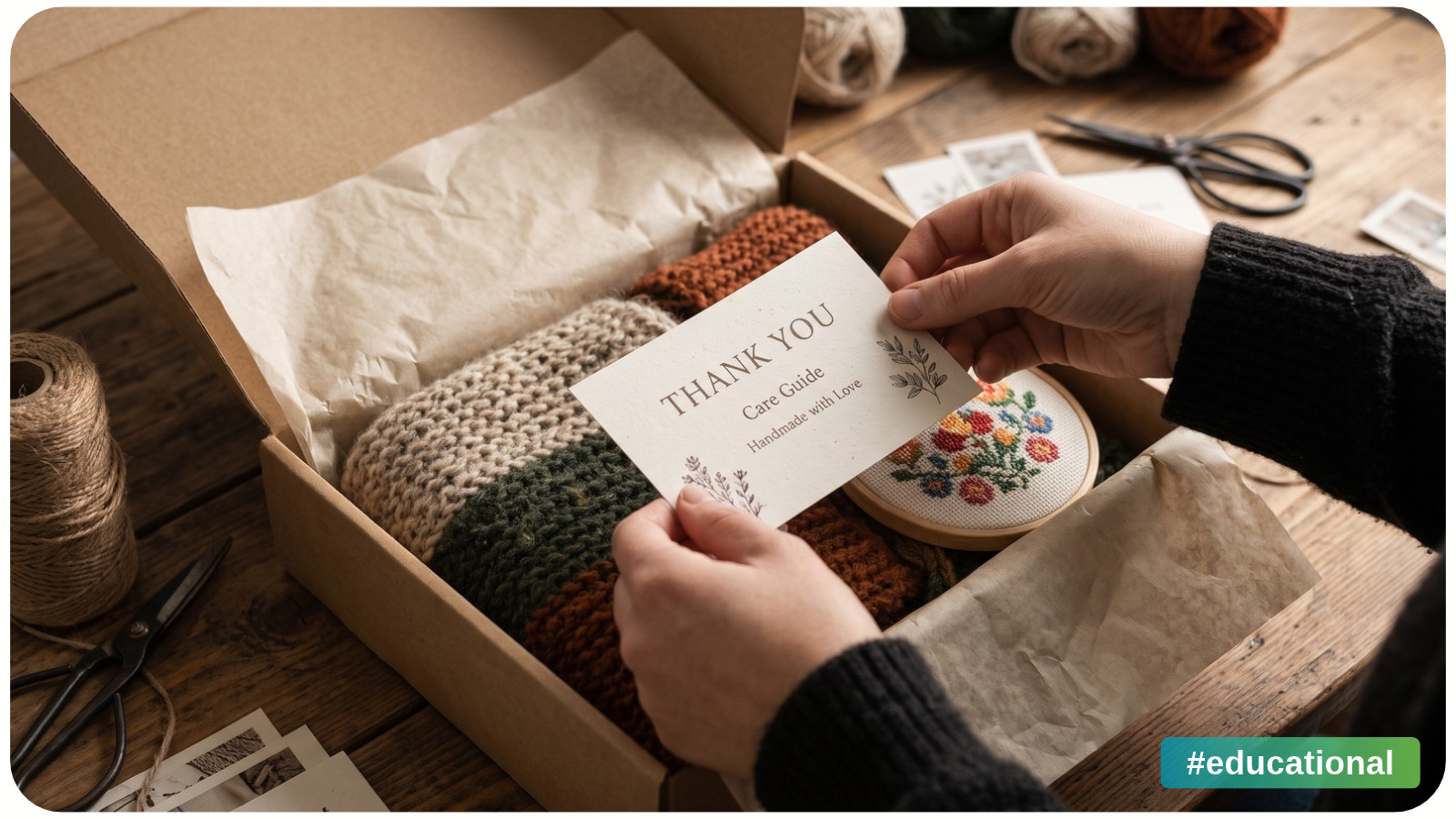
You give a friend a cross-stitch hoop. A few months later they text you a photo of a dusty corner and ask if the whole thing can go in the wash. A care card gives them the answer when they first unwrap the gift.
To write care instructions for a handmade item, name the item and give a specific cleaning method, a drying or storage step if needed, and the main action to avoid. Choose directions that suit the finished piece, including its lining, trim, backing, or finish. Then write them in the order the recipient will use them.
Handmade Care Card Template
Copy this wording for a gift tag, package insert, or product listing. Keep the lines that apply to your piece. A keepsake box you only dust can skip the drying line.
[Name of item]
Clean. [Method, plus water temperature, cycle, or cleaner if needed.]
Dry. [How and where to dry the item, if needed.]
Display or store. [One detail that protects the item.]
Avoid. [The most important action to avoid.]
Questions? [Maker name or contact, if helpful.]
Start each instruction with an action. “Air dry” leaves the recipient to choose between hanging and laying flat. “Lay flat on a clean towel to dry” tells them what to do. If you write “spot clean,” name what to use and how to use it. For fabric you have checked with water, you might say, “Blot the mark with a soft cloth dampened with cool water.”
1. Check Every Material in the Finished Piece
Start with the care directions from the suppliers. List the materials someone will actually clean together. For a sewn pouch, that includes the outer fabric, lining, zipper, and the layer that gives the pouch its shape. For a stitched hoop, include the floss, fabric, hoop, and backing.
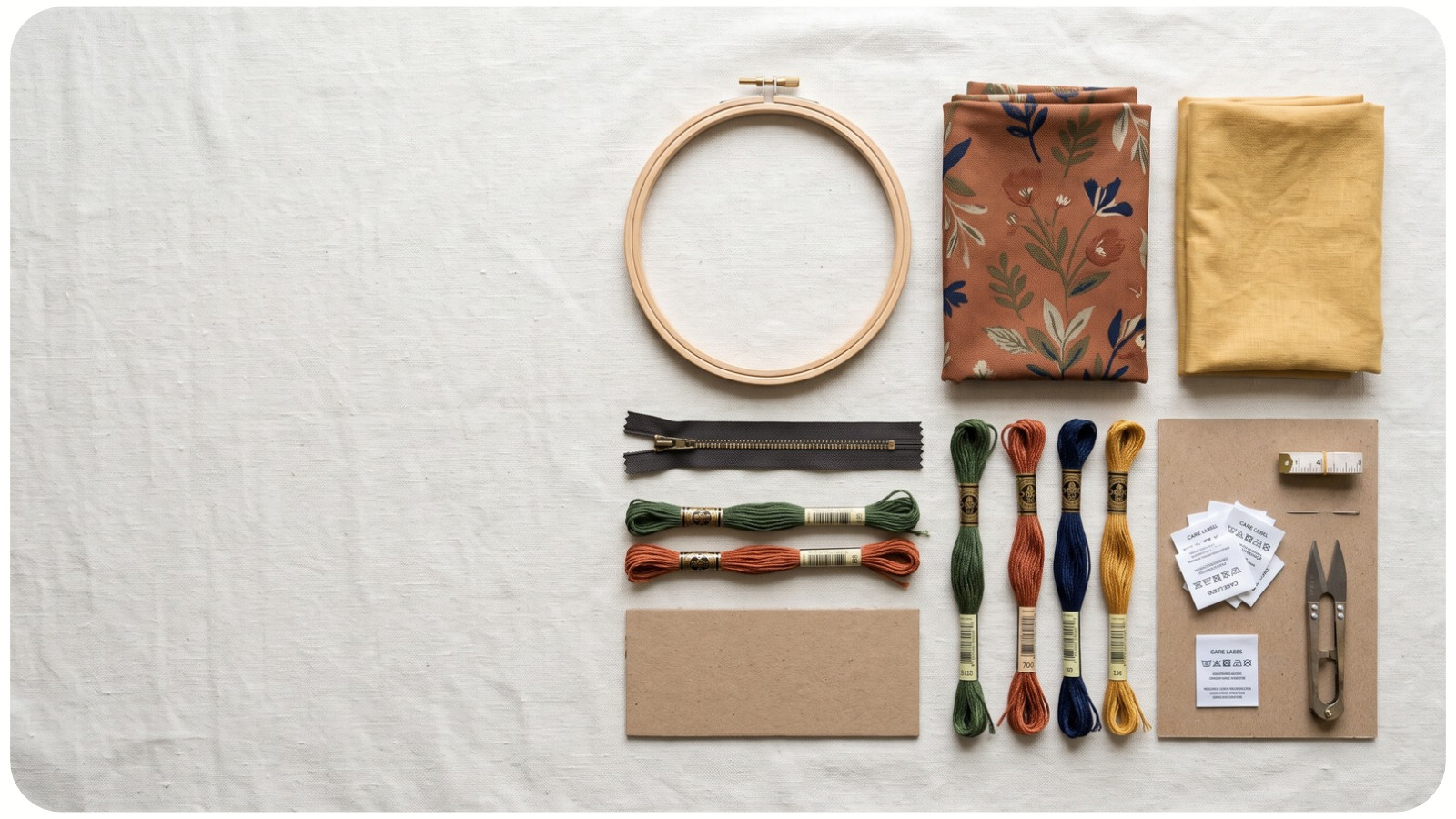
For example, you might use washable cotton for the front of a hoop and glued paper for the back. Once assembled, that hoop needs care directions that keep the backing dry. For advice on checking the thread, fabric, and embellishments together, see DMC's finished needlework guide.
Keep the material names and supplier directions with your project notes. If you offer the same design with a different lining, trim, or finish, those notes tell you what to check before you reuse the card.
2. Check the Care Method Before You Print
Use the exact method you plan to write down. A scrap with the same thread and fabric can help you check for color transfer. A spare finished piece can show how the seams, glued layers, and other details behave together.
• For a washable textile, note the water temperature, cycle or hand-wash method, and how you dried it. Check for color transfer, changes in size or shape, and loose trim after it has dried.
• For a finished surface, try the recommended cleaning method on a scrap with the same finish, following the supplier's directions. Look for marks, dull patches, or color on the cloth.
• For items meant to be washed often, repeat the proposed wash and dry cycle on a representative sample to see what changes with repeated care.
Say a pouch's dark lining leaves a mark on the pale outer fabric in your proposed wash. Check a different method or change the lining and test again. “Wash separately” might protect other laundry, but the lining and outer fabric still touch each other. Write the instruction once you have a method that suits both.
Care Instruction Examples for Handmade Items
Use these three examples as models for the wording. Each card assumes a specific set of materials and construction. Confirm those details before you reuse the instructions.
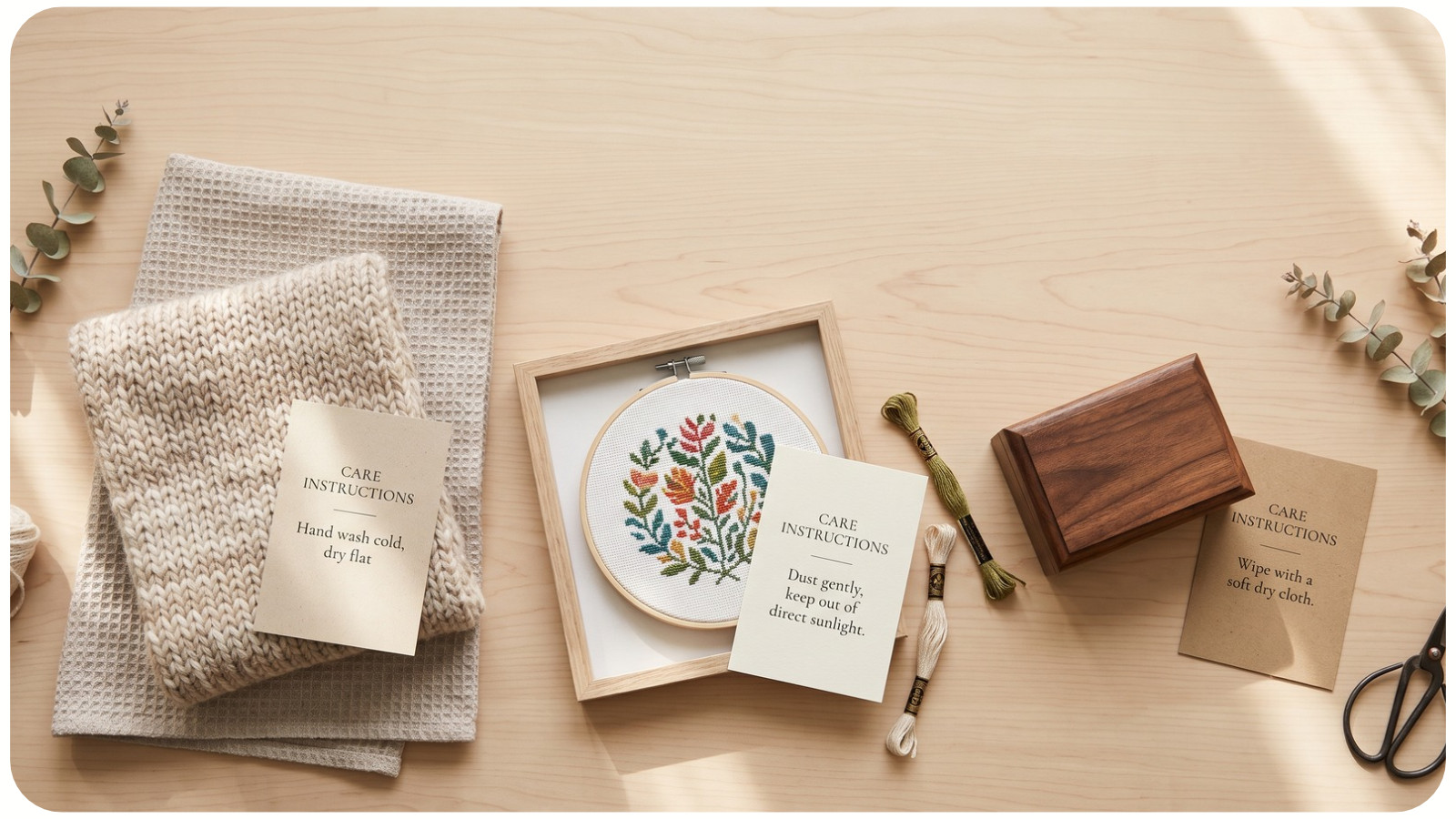
Hand-Knit Wool Scarf
For a knit scarf whose yarn and construction suit hand washing and flat drying.
Hand-knit wool scarf
Hand wash in lukewarm water with a mild wool detergent.
Rinse gently and press out excess water without wringing.
Reshape and lay flat on a clean, light-colored towel to dry.
Check the yarn and finished item before reusing this card for another wool piece. Woolmark gives separate directions for washing wool and drying wool.
Cross-Stitch Hoop With Glued Paper Backing
For an indoor display piece with a smooth wooden rim and a glued paper back that needs to stay dry.
Cross-stitch display hoop
Dust the wooden rim with a soft, dry cloth.
Hang indoors away from direct sunlight.
Keep the stitched fabric and backing dry. If the stitches need cleaning, contact the maker.
Bright light can fade textiles over time. For more on where to hang finished needlework, see the Canadian Conservation Institute’s textile care guide.
Deciding how to finish your own hoop? Check whether to wash your stitching before mounting it, then see how to finish the back of an embroidery hoop for display.
Finished Wooden Keepsake Box
For a decorative box with a stable finish that the maker has checked for dry dusting.
Wooden keepsake box
Dust with a soft, dry cloth.
Keep indoors in a dry spot, away from direct sunlight.
Keep the box out of water and avoid spray cleaners.
Cleaning methods vary by finish and its condition, as explained in the Canadian Conservation Institute’s guide to wood finishes.
Where to Put Care Instructions for Gifts and Shop Orders
For a gift, tuck the card next to the item so it comes out with the piece. If the gift is a keepsake, a short note with the maker's name or occasion can travel with it. See our guide to preserving the stories behind handmade heirlooms.
For a shop order, put the main directions in the product listing and include a matching card in the package. If the instructions differ by material or finish, make it clear which option they apply to. A QR code can lead to extra details. Keep the essential steps on the card so the recipient has them at hand.
If you make or import clothing for sale in the United States, check whether the FTC's Care Labeling Rule covers your product. The rule generally requires a permanent care label for covered garments, with exceptions for some items. A package insert can offer extra care details alongside any required label. For the details, see the FTC's guidance on the U.S. Care Labeling Rule.
Before you print, hand the card to someone who hasn't seen you make the item. Ask what they would do first if it needed cleaning. If their answer differs from yours, rewrite the line that left room for a guess.