


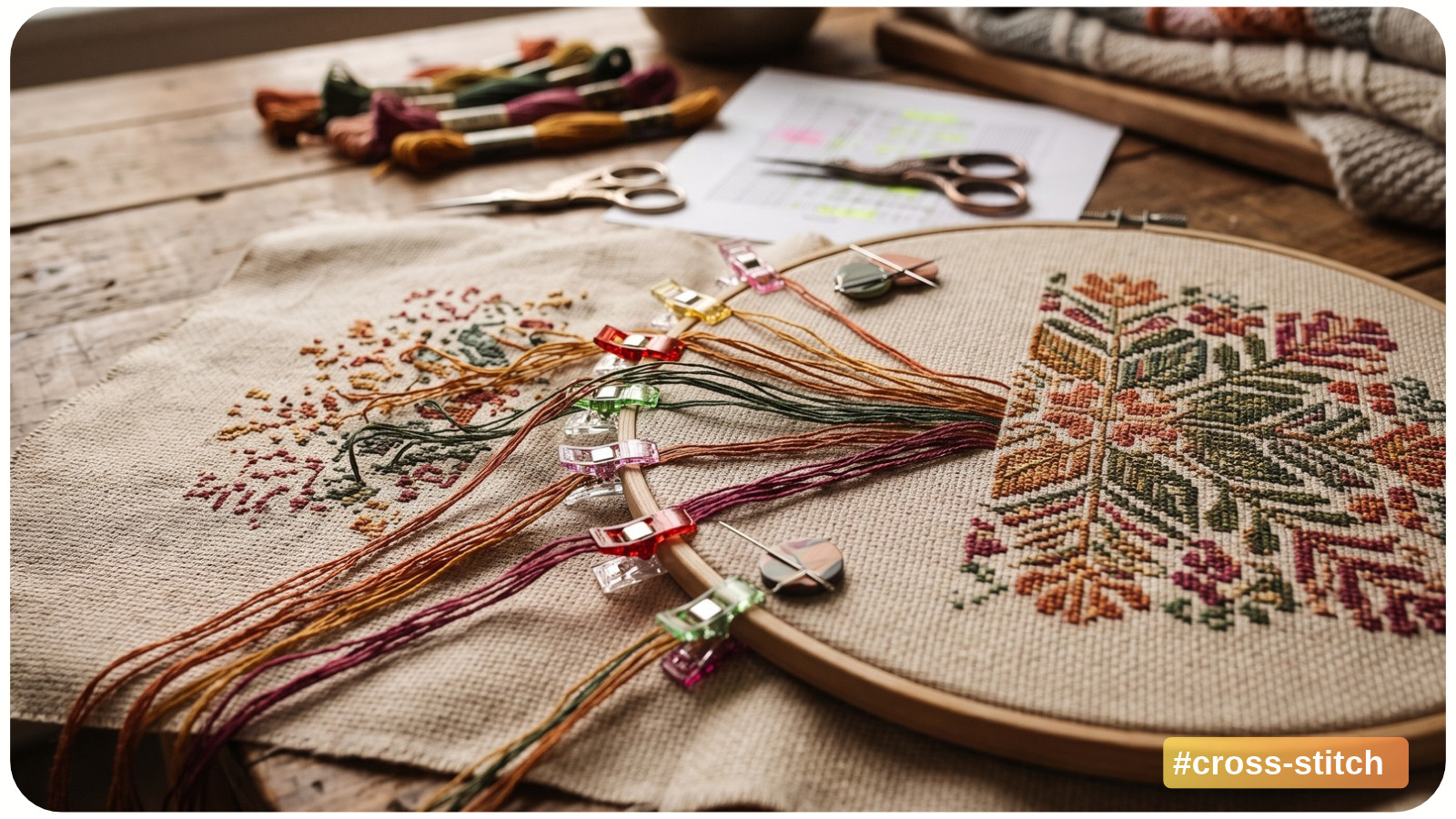
Try parking when a section has many single stitches in different colors. Try cross-country stitching when you can follow one color through a clear group of stitches. On a landscape, you might work one blue at a time in the sky and park threads row by row in the wildflowers.
Parking follows a working area and leaves each thread ready at its next stitch. Cross-country follows one color through a chosen area before you switch. Both methods make the same full crosses. The difference is the order in which you stitch them.
Parking vs. Cross-Country Stitching at a Glance
Choosing a method by chart layout and stitching habit | ||
What you see | Parking | Cross-country |
|---|---|---|
Scattered single stitches in several colors | Work in a small area and keep nearby colors ready. | Follow one symbol at a time, with more counting between scattered stitches. |
Large groups of one color | Finish a run before parking the thread for a nearby stitch. | Stitch the whole group before changing floss. |
Open fabric between separate motifs | End the thread before a gap that would leave a visible carry. | Finish one motif and restart the same color in the next. |
Frequent breaks | Mark parked stitches separately from finished crosses. | Mark finished crosses so you can find the next stitch of your current color. |
Look at how the colors are placed in the part you’re about to stitch. A full-coverage chart, where the design area is filled with stitches, can have both solid patches and dense color changes.
How to Park Threads in Cross Stitch
To park a thread, bring it from the back to the front through the hole where the next stitch of that color will start. Leave the floss on the front until you reach that square in your stitching order.
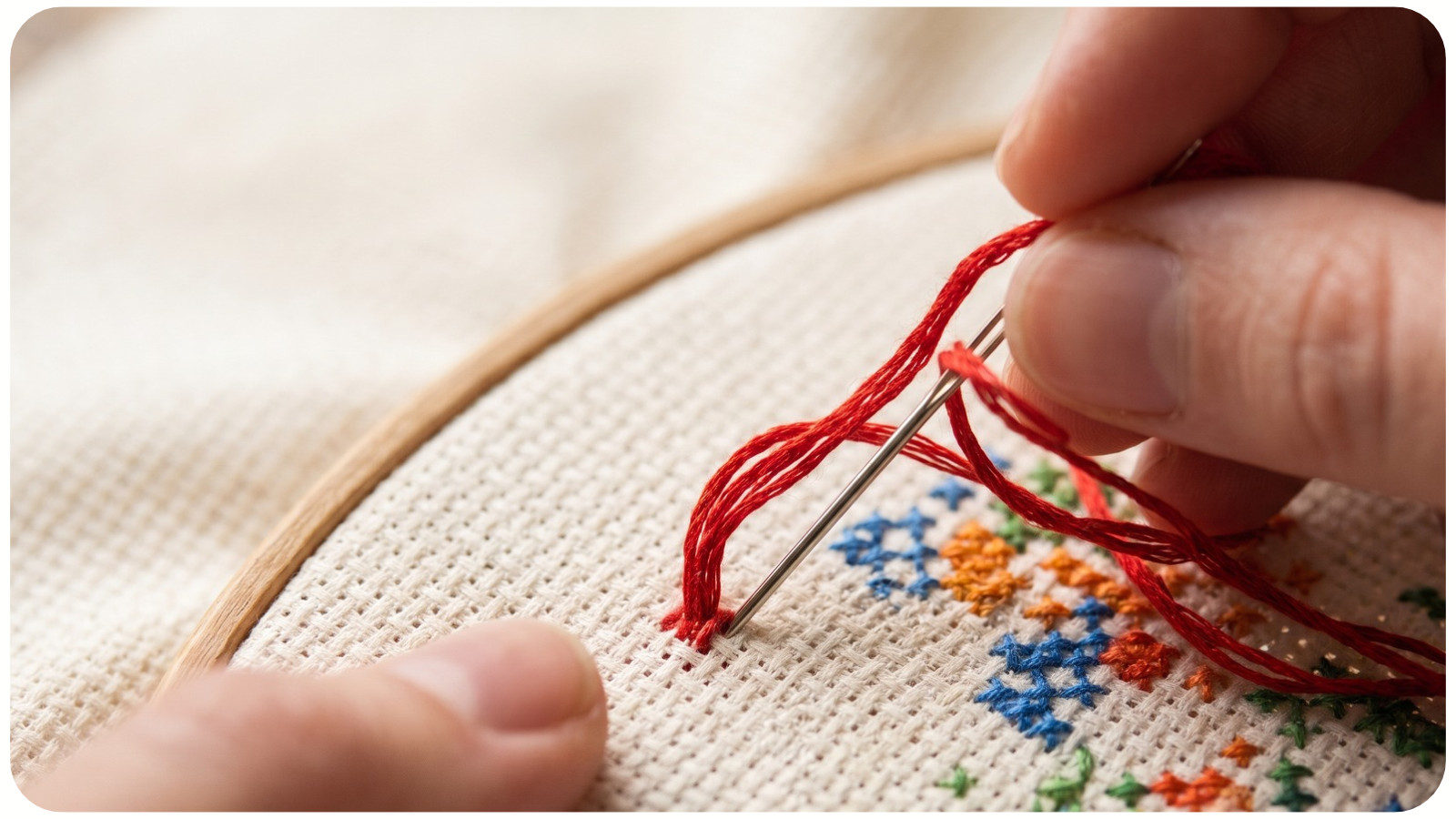
1. Pick a short row or a small area and decide which direction you’ll work. A few squares are enough for a first try.
2. Stitch the current color up to the point where you’ll switch. Find its next square. If the next stitch is nearby and the carry will lie flat, bring the floss up through that square’s starting hole. If you normally start at the lower-left corner, park there.
3. Leave the parked floss aside and switch colors. Use one chart mark for parked stitches and another for finished crosses.
4. When you reach a parked thread, check the square’s symbol against the floss key. Two similar greens can be hard to tell apart. Move the other loose strands aside as you stitch.
If the next stitch of that color is far away or across bare fabric where the thread could show, secure the floss and restart it later. You can park by rows or in chart blocks. If a color run crosses a block line and still fits your working order, you can keep stitching across the line. See Scarlet Quince’s illustrated parking tutorial.
How Cross-Country Stitching Works
Pick one symbol and work its stitches through a chosen area before moving to another color. For example, stitch the navy roof first, then move on to the windows. When the same navy appears in a separate chimney across bare fabric, finish the roof thread and start the navy again at the chimney.
For a nearby stitch, count across and down or up from a stitch you’ve already checked. If the new position is hard to place, check it against a second stitch or a grid line before bringing the needle up. Mark the cross when it’s finished so you can use it as a reliable reference later.
A carry is the thread that runs along the back between stitches. A dark carry can show through light fabric, and a tight carry can pull the fabric out of shape. Look at the front before committing to a questionable jump. If you can see a shadow or the fabric pulls, undo the carry and restart at the new spot. Read DMC’s guide to starting and ending threads.
Which Method Is Faster or Neater?
Cross-country can move quickly through a solid patch because you stay with the same floss. Parking can save starts and stops in confetti, where single stitches of several colors are scattered through a small area. If you spend a lot of time sorting parked threads, that can eat into the time you save. Try the method on the part of the chart that usually slows you down.
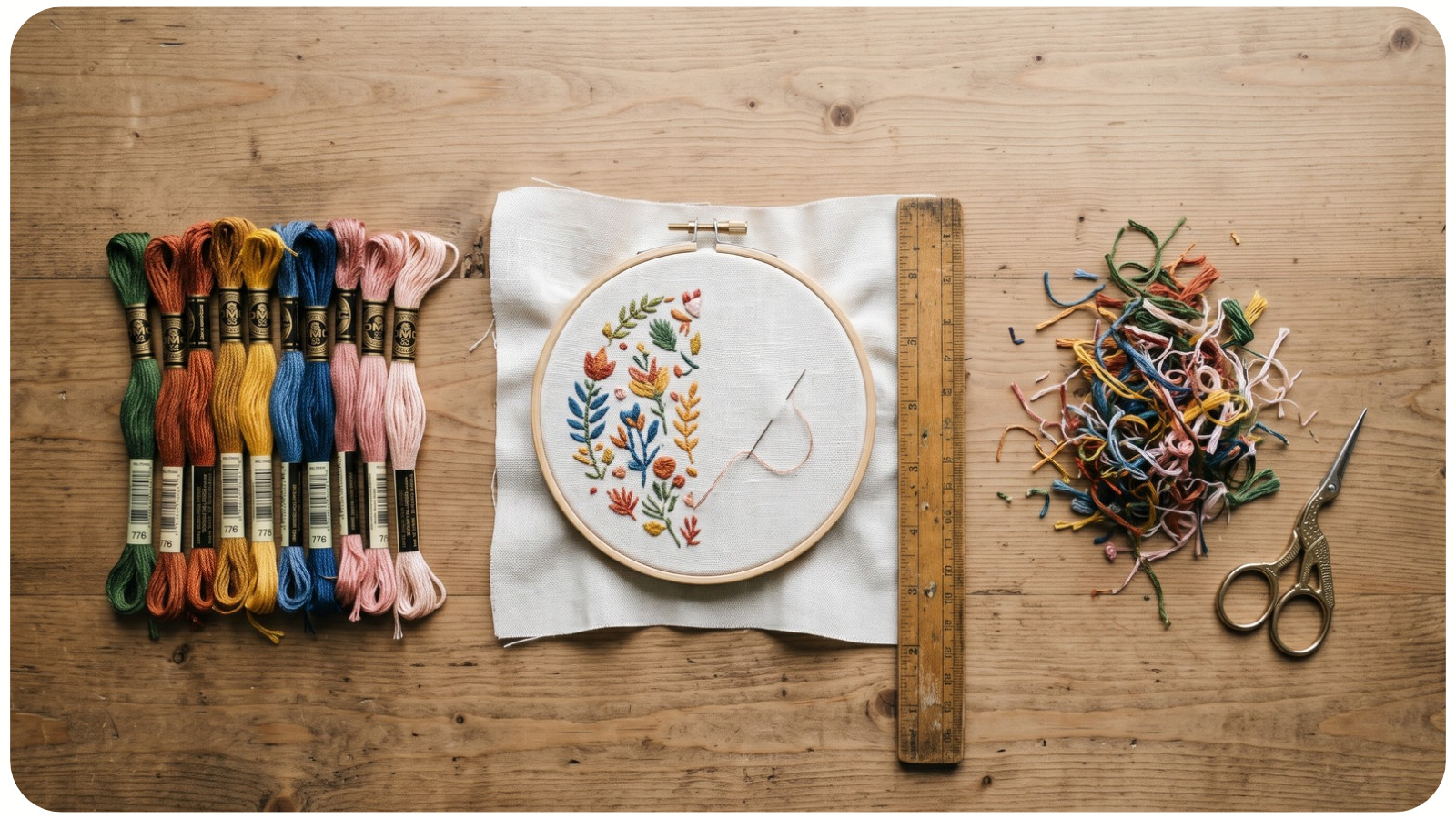
Parking in order can help you fill stitches before neighboring crosses crowd their corners. With either method, keep the top diagonals slanting the same way and check the back for long, loose carries or tight ones that pull. To compare floss use, consider both the length carried across the back and the ends trimmed at every restart. See the APS guide to estimating cross-stitch floss.
Try Both Methods on a 4 × 4 Chart
Use three contrasting floss colors on a scrap of your project fabric. Each letter is one full cross. Stitch the chart twice in separate spots. Keep the fabric and strand count the same so you can compare how each stitching order feels.
Mini practice chart. A, B, and C are three floss colors. | ||||
Row | Col. 1 | Col. 2 | Col. 3 | Col. 4 |
|---|---|---|---|---|
1 | A | A | B | C |
2 | B | A | C | B |
3 | C | B | A | C |
4 | B | C | B | A |
Parking sample. Work left to right, from the top row down. After the first two A stitches, bring A up at the starting hole of row 2, column 2. Leave A on the front while you finish B and C in row 1 and stitch B at the start of row 2. Pick up A when you reach its square. Continue in the same order, parking each color at its next nearby stitch or ending it when you’ve used it for the last time.
Cross-country sample. Stitch the five A squares first, counting each move. Then stitch the six B squares and the five C squares. Pause halfway through each sample. When you pick it back up, notice how easily you find your next stitch and how often you have to recount. If you’d like a larger follow-up project, explore these small cross-stitch designs for short sessions.
Can You Switch Methods Mid-Project?
Yes. You might stitch a solid sky by color and switch to parking in a cluster of trees. Before changing methods, mark your finished crosses and identify any parked threads you still plan to use. Secure and trim threads you’d have to carry a long way to reach the new section.
Do You Need to Grid Your Fabric?
Gridding is optional for either method. A fabric grid that matches the chart gives you a nearby reference for counting, especially on a large design. On a small motif, checked stitches may be enough. If you’re cutting fabric for a new chart, work out the stitched dimensions and finishing margins before laying out the grid. Use the APS guide to calculating cross-stitch fabric size.
Start your next session with one section. Follow the color when the group is easy to count, or follow a few rows and park nearby threads when the colors change often. When you stop, leave a mark that tells you exactly where to start again.