


A tiny shoe beside a staircase can suggest a whole evening: a celebration, a hurried escape, someone left searching. A stitched doorway with one light shining through it can make us wonder who is coming home.
Folk tales can teach modern makers to tell stories through meaningful objects, moments of change, and repeated details. In crafts, visual storytelling means arranging images, colors, and materials so that a handmade piece suggests an action, a relationship, or something about to happen.
For anyone interested in the history of needlework and handmade design, these stories also offer a question worth exploring: how does a tale move from someone's voice into something we can hold?
How Folk Tales Move From Spoken Stories to Made Objects
The Library of Congress guide to folktales describes stories passed by word of mouth within communities and across generations. Printed fairy tales overlap with this world of storytelling, but a published text represents a particular telling. It does not preserve every version of a story.
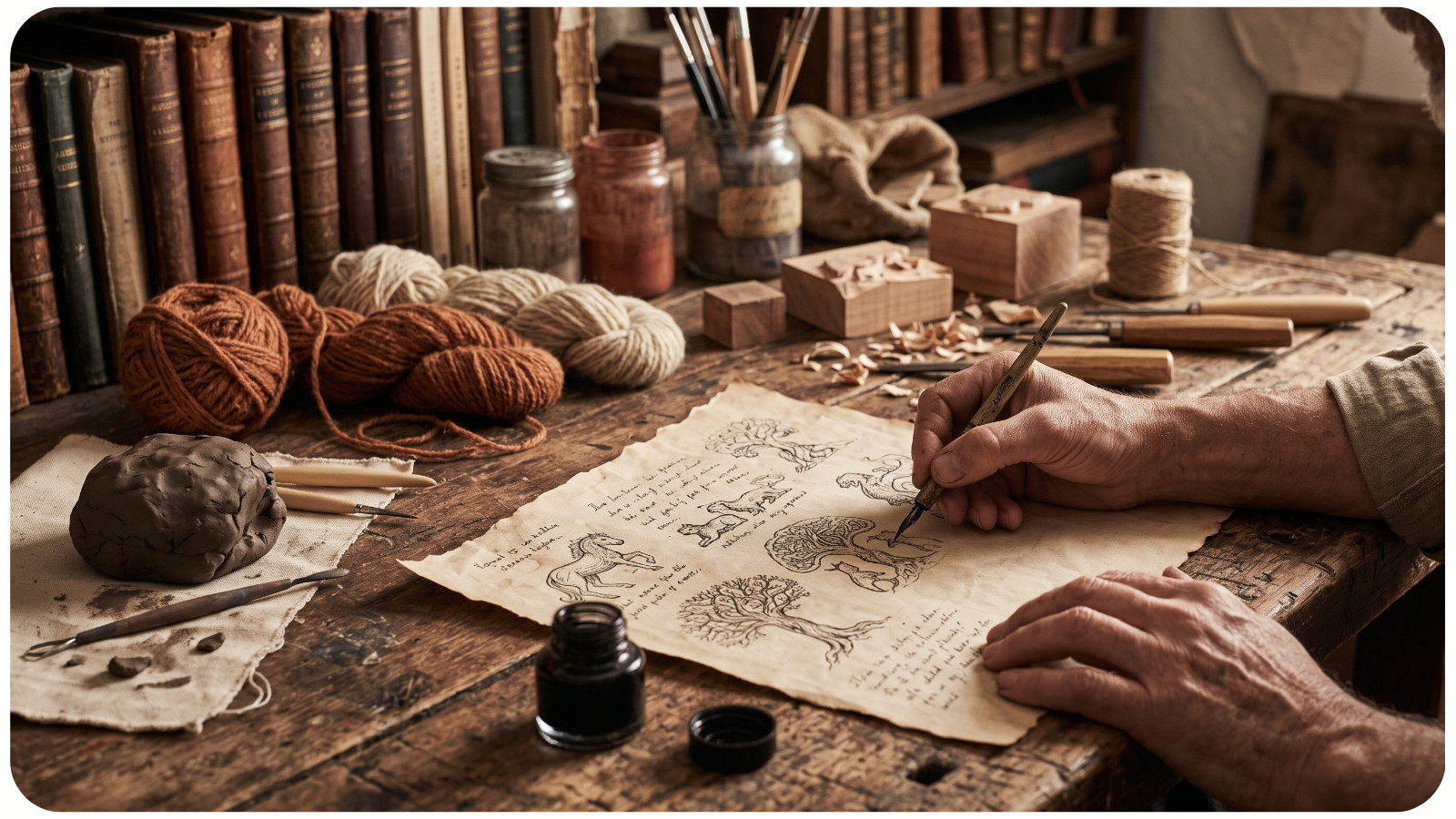
That distinction matters when looking for craft inspiration. As the New York Public Library explains, details change as tales pass between tellers. Begin with a named version so you know which details belong to the story you are using.
Painted Scrolls That Unfold With a Song
In Bengal, patua artists have used painted scrolls to accompany sung stories. The Philadelphia Museum of Art's record of Durlav Chitrakara's 1916 Naramedha Pata describes how a performer reveals successive pictures while singing the corresponding episodes.
This broader storytelling tradition is not limited to fairy tales. It offers a useful example of pictures, a made object, and a performance working together. A modern maker might explore a similar relationship through an original folded-paper story or a sequence of fabric panels.
Fairy-Tale Imagery in the Home
The Victoria and Albert Museum records Walter Crane's Sleeping Beauty wallpaper, produced by Jeffrey & Co. in 1879. This was a manufactured decorative product, showing how fairy-tale imagery could move from the page into everyday surroundings.
A repeating design can therefore be a place to look for storytelling ideas, alongside a single framed picture. If you enjoy this connection between objects and their setting, explore our introduction to what folk art is and why it looks different around the world.
A Fairy-Tale Character Told Through Needlework
Needlework offers a direct connection, too. London Museum holds a bodice designed by Léon Bakst for Carabosse, the wicked fairy in the 1921 ballet The Sleeping Princess, an adaptation of The Sleeping Beauty. Its velvet surface carries fantastical creatures embroidered in gold and silver thread.
The object shows how a fairy-tale world could take shape through clothing and stitched decoration. For today's makers, it suggests that a story can develop across a surface someone wears or uses, as well as within a picture.
Let One Small Object Carry the Story
In Charles Perrault's Cinderella, the lost glass slipper helps identify the young woman who attended the ball. The University of Colorado Boulder's account of a 1923 edition traces that object through the escape and the later search. That detail belongs to this version; it should not be treated as a feature of every Cinderella tale.
For a maker, the useful lesson is that an object can take part in the action. The slipper matters because someone loses it and someone else finds it.
Try giving a detail that kind of purpose in your own work. A key lying beside a closed door suggests something different from a key already turning in its lock. A paper boat resting on a shelf feels different from one approaching a dark tunnel.
This is useful for a small embroidery hoop, a handmade card, or a painted ornament. There may be room for only one main shape and a few supporting marks. Choose an object that raises a question, then place it where that question becomes visible.
Choose the Moment When Something Changes
A tale may contain journeys, arguments, helpers, and a final surprise. Trying to fit every episode into one design can leave the elements competing for attention.
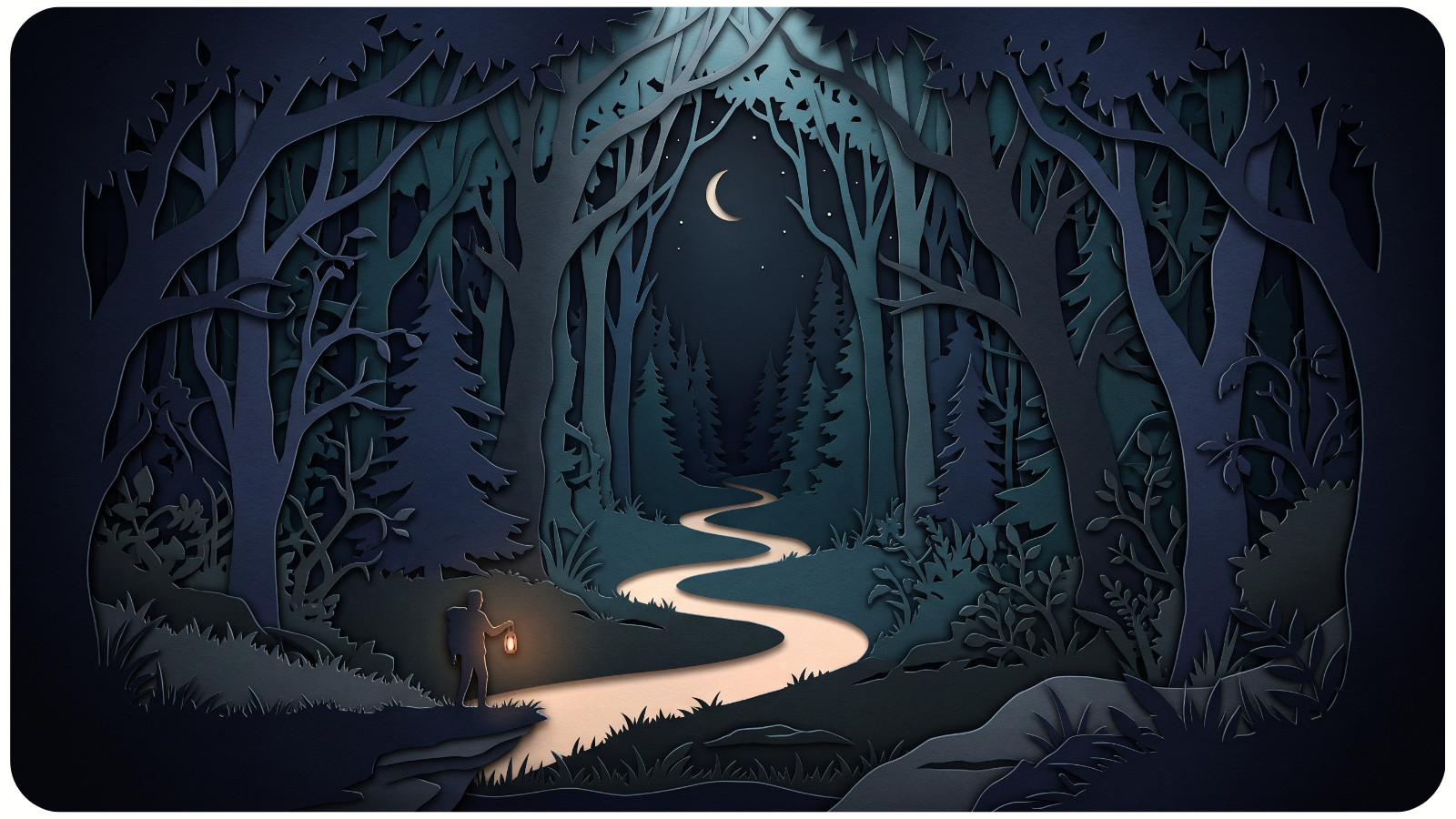
Instead, choose a moment with an unfinished action: a hand reaching toward a door, a bird lifting away from an open cage, or a traveler pausing where a path divides. These could be starting points for an original scene inspired by the themes you enjoyed in a story.
For a paper-cut picture, you might show a small figure at the edge of a large wood. Keep the figure easy to find and give the path a clear direction. For an embroidered scene, a curtain lifted slightly from a window may provide enough movement.
Before adding another flower or star, ask whether it helps explain the moment. A beautiful detail can still distract from the action you want someone to notice.
Use Repetition to Make Change Visible
Repeated shapes can establish a visual rhythm. Once that rhythm is clear, changing one detail gives the viewer something to investigate.
Imagine a fabric border made from little closed windows. Near one corner, a single window stands open. Or picture a row of stitched birds, with one turning toward a figure outside the pattern.
The repeated detail sets an expectation. The changed detail interrupts it and may suggest that something has happened.
This offers a way to explore visual storytelling in crafts without drawing a complicated scene. You could also make a folded-paper strip showing a seed becoming a plant. In these contemporary project ideas, the story comes from the relationship between what stays the same and what changes.
Give Color and Materials a Clear Role
A bright thread against a quiet background can guide attention toward the part of a scene you want noticed first. Imagine a mostly gray stitched landscape with a warm yellow window. That small area can become the starting point for the story.
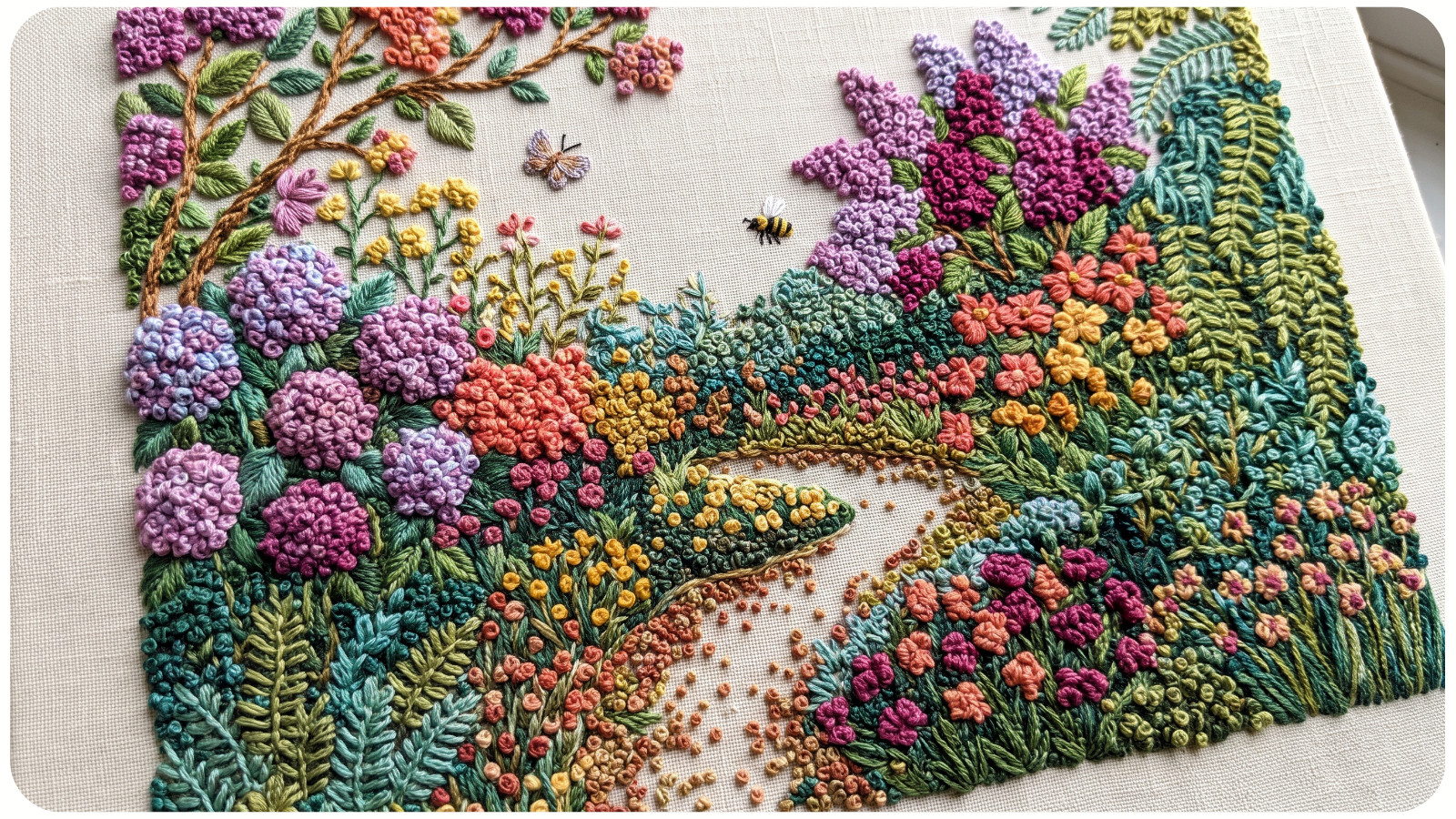
Color is not a fixed dictionary in which yellow always means hope or red always means danger. Build meaning within the work itself. A warm window may suggest shelter because of the surrounding darkness and the figure approaching it.
Materials offer another way to develop the scene. For an original mixed-media piece, smooth paper might form a calm sky while torn paper gives the path a rough edge. In a stitched picture, a small patch of raised texture could distinguish a garden from the flat ground outside it.
Experiment on scraps before committing to the finished piece. Our guide to choosing colors that work together offers a starting point for exploring combinations. Let the needs of your scene guide the final choice.
Keep Folklore-Inspired Crafts Connected to Their Sources
Begin with the name of the tale, the version you read, and the community or place associated with that telling when the source identifies it. This gives your creative choices a clear starting point.
Avoid gathering unrelated patterns into one design and describing the result as an authentic traditional style. A museum photograph can help you study an object, but it does not explain every belief or use connected with it. Our guide to finding creative inspiration in museums explores ways to look closely and develop your own ideas.
The patua scroll example offers a lesson about revealing images alongside a sung story. You might explore that relationship using your own family memory and original drawings, while acknowledging the tradition that prompted the idea.
For a fairy-tale project, a short note could read: “Inspired by the lost slipper in Charles Perrault's Cinderella.” It helps viewers connect your interpretation to its source.
Turn a Folk Tale Into a Small Making Brief
Before choosing supplies, write one sentence about the part of the story that interests you. Perhaps it is someone finding help, leaving home, or recognizing something they had overlooked.
Then make four decisions:
• The moment: What is happening in this picture?
• The main detail: Which object or figure carries that action?
• The relationship: How will placement, repetition, or contrast make it clear?
• The format: Does the idea suit one image, a border, or a short sequence?
Try a rough sketch before committing to fabric, clay, or a carefully cut sheet of paper. Ask someone what they notice first and what they think is happening. Their answer can help you decide which details need more attention.
A small handmade piece cannot hold every part of a tale, and it does not have to. It can hold the moment that stayed with you: the door opening, the object left behind, or the light someone was walking toward.