


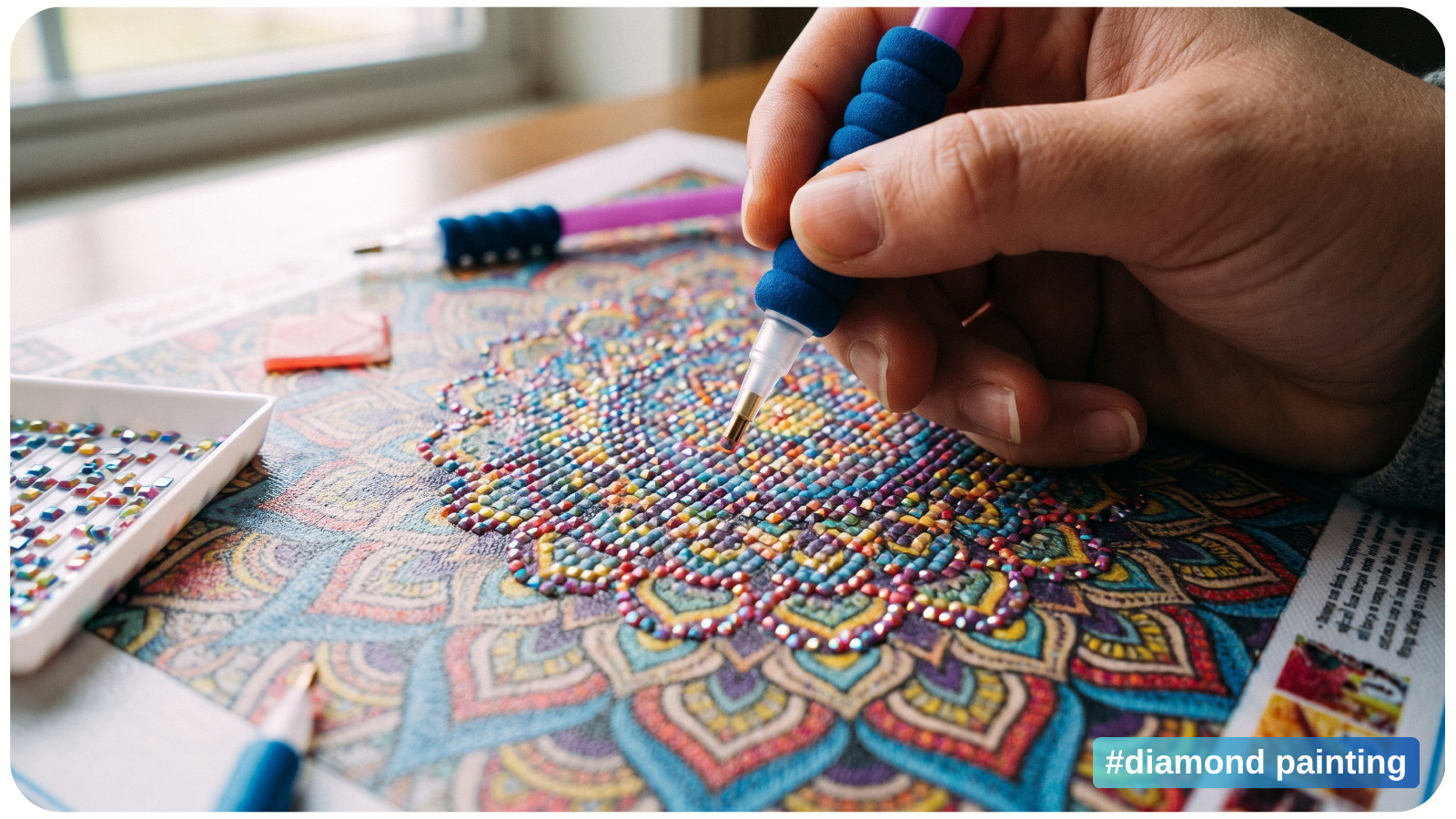
AB diamond painting uses small faceted gems, called drills, with an Aurora Borealis coating. This rainbow-like finish adds colored shimmer over each drill’s base color. Named after the Northern Lights, AB drills catch the light differently from standard drills and are often used to highlight selected parts of a design.
If you have opened a kit and noticed a few bags that seem to flash pink, blue, or green, you may already have met them. You place these drills on a sticky canvas much like regular ones. The main differences are their finish, their effect on the picture, and sometimes how they release from your pen.
Here is how to recognize AB diamond painting drills, read their codes, and use them without losing the details you love. If you are new to the terms, start with our beginner’s guide to diamond painting drills.
What Does AB Mean in Diamond Painting?
AB stands for Aurora Borealis, another name for the Northern Lights. In diamond painting, it describes an iridescent coating. “Iridescent” simply means that the surface shows shifting colors as the light or viewing angle changes.
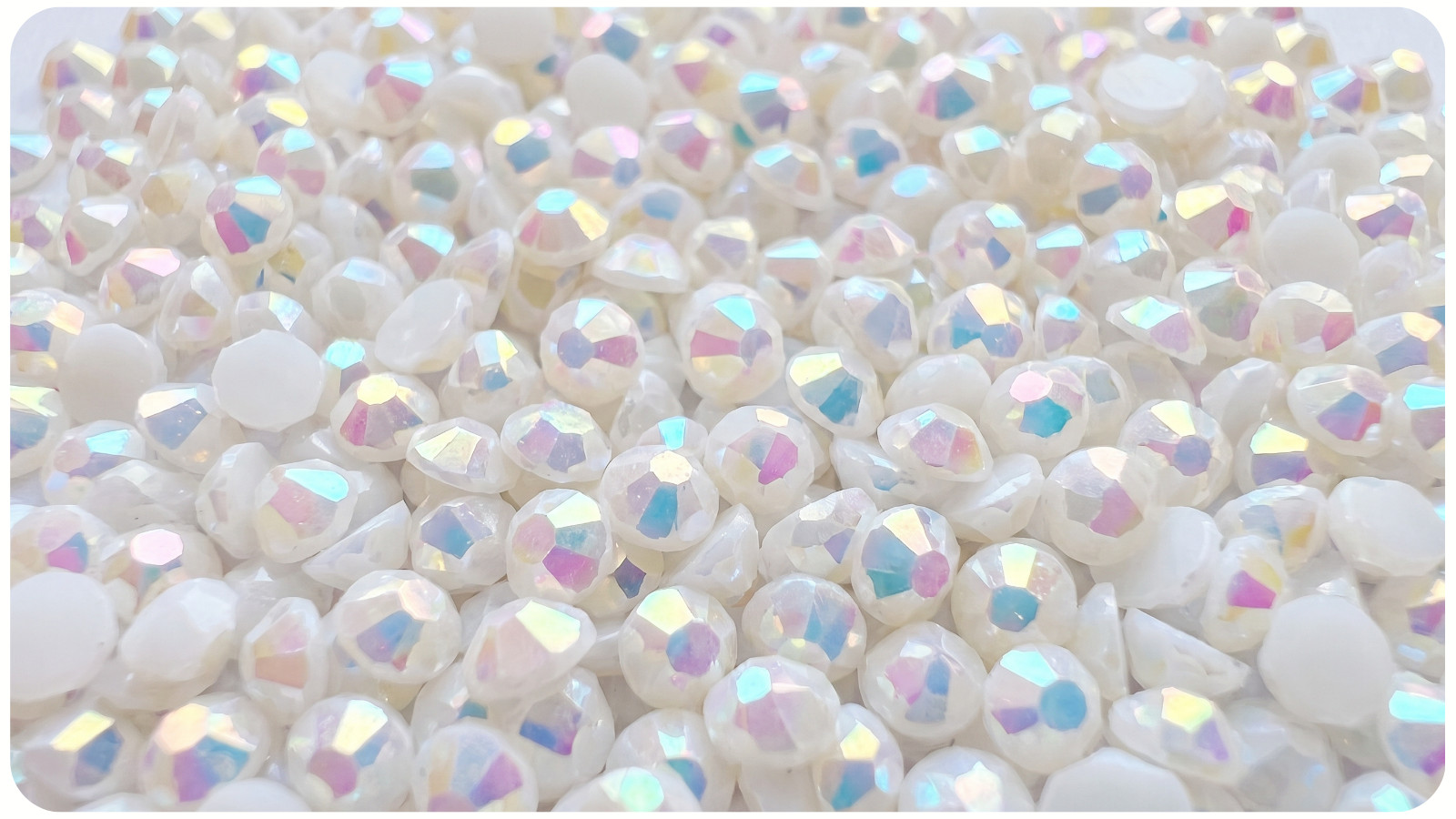
An AB drill still has a base color. A white one, for example, can show colored reflections across its surface rather than looking plain white from every angle. The exact effect depends on the drill and lighting. Diamond Painting Drills describes these reflections as additional pink, blue, yellow, and green tones.
AB describes the finish. It does not identify a single color, a drill shape, or a scene featuring the Northern Lights. An AB kit could show flowers, animals, a landscape, or almost any other subject.
AB Drills vs. Regular Diamond Painting Drills
Regular drills already sparkle because their small flat faces, called facets, reflect light. AB drills add a rainbow-like surface effect to that sparkle.
AB and regular diamond painting drills compared | ||
Feature | Regular drills | AB drills |
|---|---|---|
Finish | Standard finish without an AB coating | Iridescent AB coating |
Color effect | Base color with reflected highlights | Base color with extra colored reflections |
Design role | Build the main image and its shading | Often highlight selected details |
Shape | Available in round and square | Available in round and square |
Basic placement | Flat side against the canvas adhesive | Flat side against the canvas adhesive |
AB drills are not automatically better for every part of a picture. A bright reflection can be lovely on snow or a sparkling ornament. That same effect may draw too much attention to a quiet background or change the look of a softly shaded face.
Think of AB as an extra design choice. The useful question is where you want the viewer’s eye to go.
Does an AB Kit Use AB Drills Everywhere?
An AB diamond painting kit does not necessarily contain only AB drills. Check the product description and canvas legend to see which colors have the finish and where they belong.
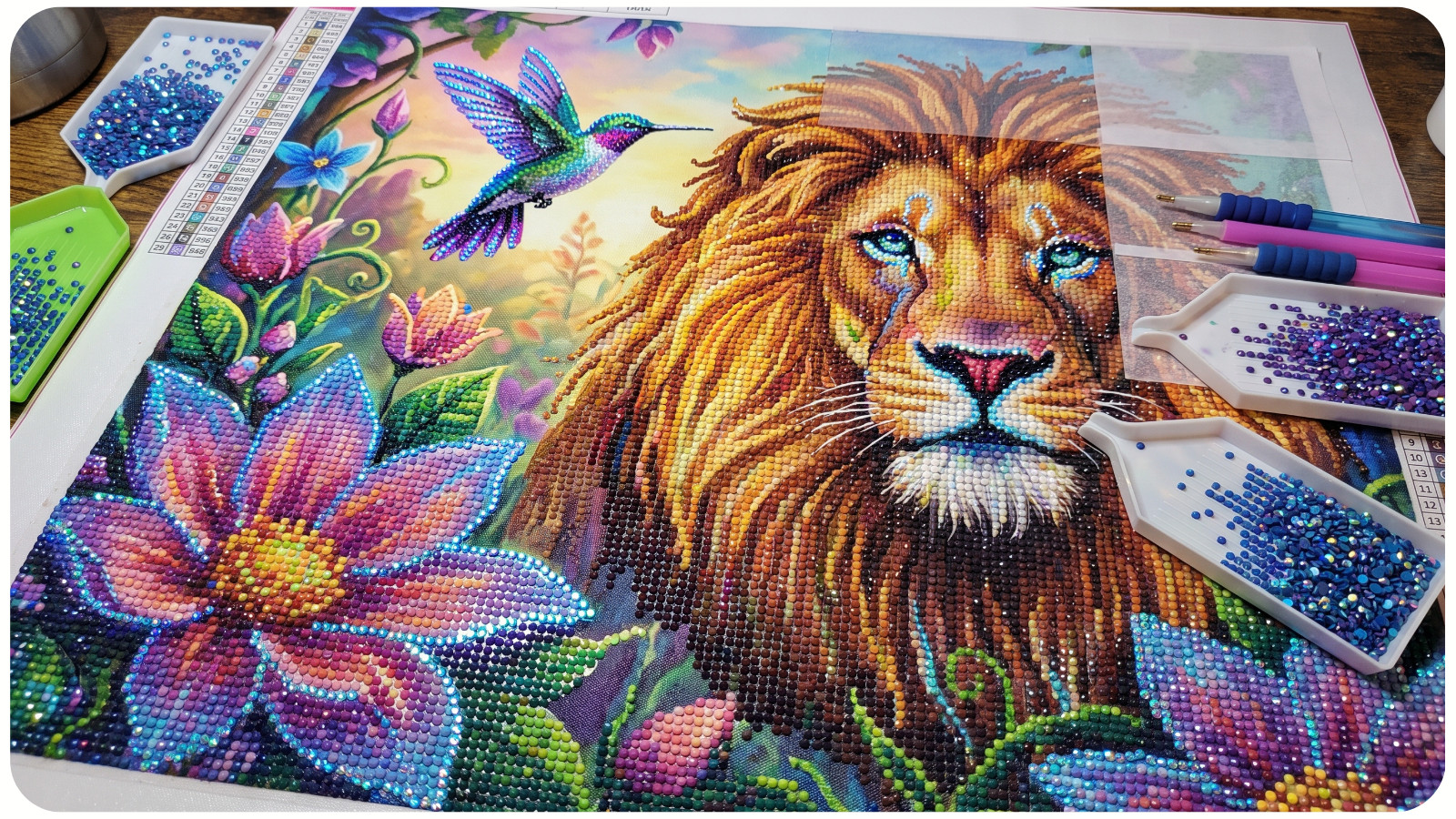
A kit may list several AB colors alongside its regular colors. That tells you how many shades have an AB finish, rather than how much of the canvas they cover. One AB color might appear in a handful of details or across a much larger section.
Also, keep “AB” separate from “full drill.” Full drill means that the artwork area is covered with drills. It does not mean every drill has an AB coating. A full-drill painting can combine regular and specialty finishes.
How to Identify AB Drills and Read Their Codes
Start with the kit’s legend and bag labels. Do not sort drills by sparkle alone, especially when several pale colors look similar under your work lamp.
Match each canvas symbol to the corresponding bag or color code. If the kit identifies AB colors, keep that information on your storage labels too. A useful label includes the symbol, the supplied code, and “AB” where applicable.
Do not assume every brand uses the same numbering system. Some suppliers connect their AB colors to familiar DMC-based numbers. Others use their own codes. For example, Diamond Art Club’s AB rainbow set uses labels such as AB208 and AB5200. Those labels are examples, not a universal key for all kits.
When buying extra drills, check the supplier’s color reference and the required shape. Keep regular and AB versions of a similar shade in separate containers so you can follow the chart accurately.
How to Place AB Drills
You can begin with your usual tray and diamond painting pen. Tweezers are another option if they give you better control.
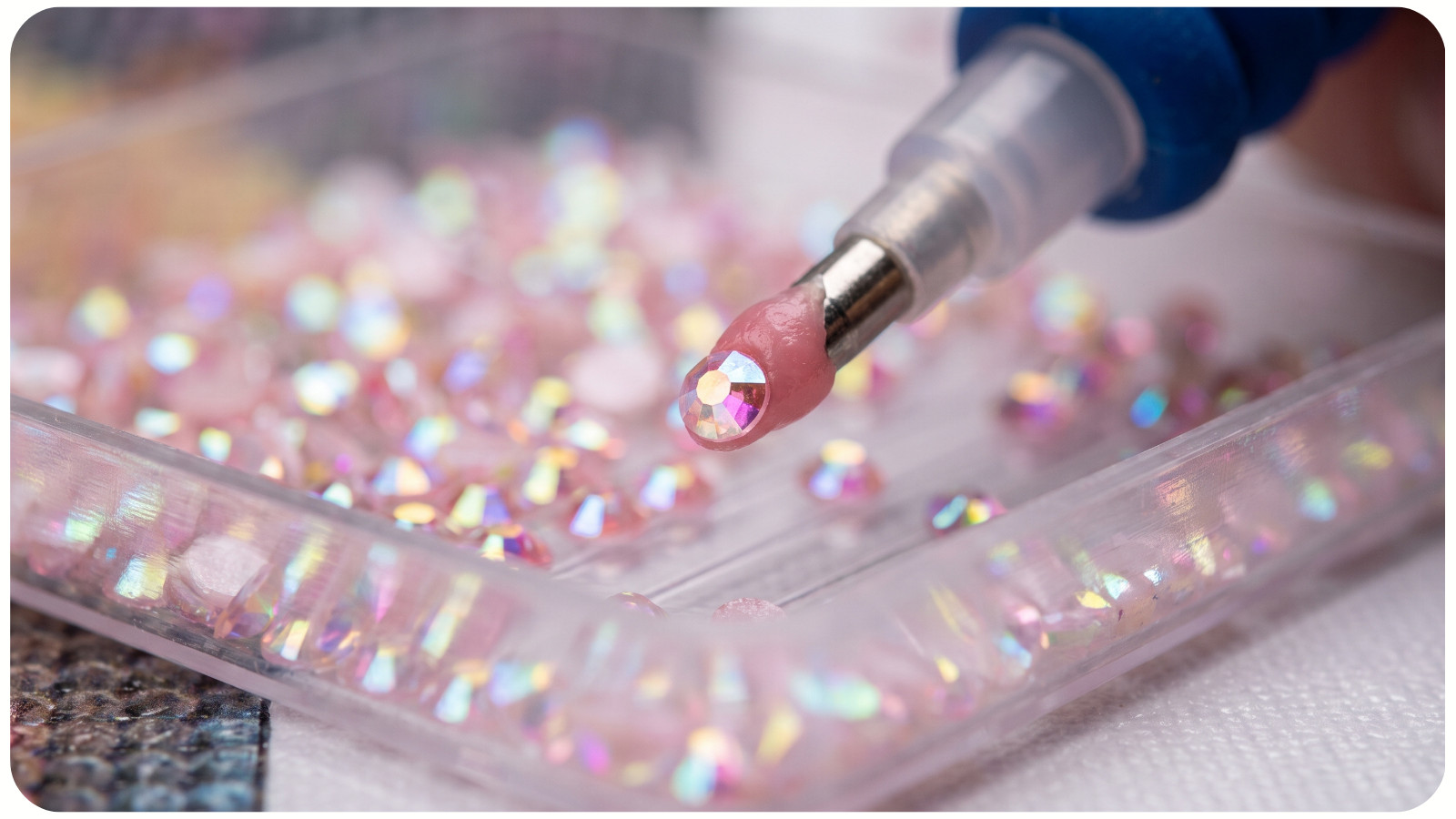
1. Check the symbol. Confirm the AB bag against the canvas legend before pouring drills into the tray.2. Turn the drills upright. Gently shake the tray to help the drills settle flat side down. Turn over any that remain upside down.
3. Pick up one drill. Use a light touch with your pen rather than pressing deeply into the tray.
4. Place it on the matching cell. Set the flat back against the adhesive and press gently to seat it. For square drills, line the edges up with the printed grid.
5. Check the placement. Look for a drill that sits flat and releases from the tool without lifting back off the canvas.
Work through a small section first. This lets you check the code, fit, and handling before repeating the process across a larger area. If the rows look uneven, see how to fix gaps between diamond painting drills.
What If AB Drills Pull Wax Out of the Pen?
Some crafters report that AB drills hold onto their pen’s wax or putty instead of releasing cleanly. Treat this as a tool-and-drill combination to adjust, rather than a reason to press harder.
Try less pressure and remove any excess wax sticking out around the tip. Test on a few spare drills before returning to the canvas. If pickup or release remains awkward, try placing individual drills with tweezers, gripping the sides gently.
These are troubleshooting options, not a guaranteed fix for every coating or pickup material. Avoid adding untested cleaners or solvents to solve a placement problem. Ask the kit supplier if the drills remain difficult to use.
Can You Add AB Drills to a Regular Diamond Painting?
Yes. You can replace selected regular drills with suitable AB drills to customize a design. Start with a small feature rather than changing every occurrence of a color.
For example, you might try a few AB accents on water reflections, snowy branches, flower centers, or holiday decorations. These are design ideas, not fixed rules. Keep the original drills so you can return to the charted version if you prefer it.
Before replacing a section, check three things:
• Shape and fit: Match the original drill shape and check the listed size. Test that the replacements sit comfortably in the grid.
• Base color: Compare actual drills together. A number or screen photo alone cannot show the full effect.
• Visual balance: View the sample from farther away and under the light where you plan to display it.
Even drills with the same DMC-based number can vary between brands or batches, as Diamond Painting Drills explains in its FAQ. The AB finish also changes how a color appears.
If a highlight starts to hide an outline or pull attention away from the main subject, reduce it. There is no fixed percentage of AB drills that every painting needs.
Are AB, Crystal, and Glitter Drills the Same?
These names describe different properties, and they can overlap. A crystal-style drill can also have an AB coating. Product names and materials vary by supplier.

AB refers to an iridescent coating. “Crystal” usually describes a transparent, gemstone-like appearance; the name alone does not prove the drill is glass. Glitter-style finishes create small sparkling flecks, while metallic finishes aim for a reflective metal effect.
Specialty suppliers distinguish these effects, so check the description instead of treating every extra-sparkly drill as AB. A close-up photo or sample is especially useful when choosing replacements.
Frequently Asked Questions About AB Diamond Painting
Are AB drills the same as 5D drills?
No. AB describes the coating. “5D” is a common marketing label associated with faceted drills. It does not tell you whether an AB finish is included, and it should not be treated as a universal quality grade. Check the kit’s actual drill specifications rather than relying on that label.
Do AB drills glow in the dark?
An AB coating reflects light; it does not by itself make a drill glow in darkness. Glow-in-the-dark drills are a separate specialty. Only expect both effects when the product specifically lists them.
Should you seal a painting because it has AB drills?
AB drills alone are not a reason to add sealer. Follow the canvas maker’s finishing instructions. If you decide to seal, check compatibility and test the exact product on spare drills mounted on a sample surface. Let it dry fully and compare the finish before treating the artwork.
Start With the Chart, Then Explore
For your first AB diamond painting, follow the supplied chart and learn how the finish looks in your own lighting. Check the codes, use gentle placement, and keep specialty drills clearly labeled. When you feel ready to customize, try one small highlight and step back to judge it. A few well-chosen accents can give you the shimmer you want while keeping the picture clear. For more practical help, explore our diamond painting guides.