


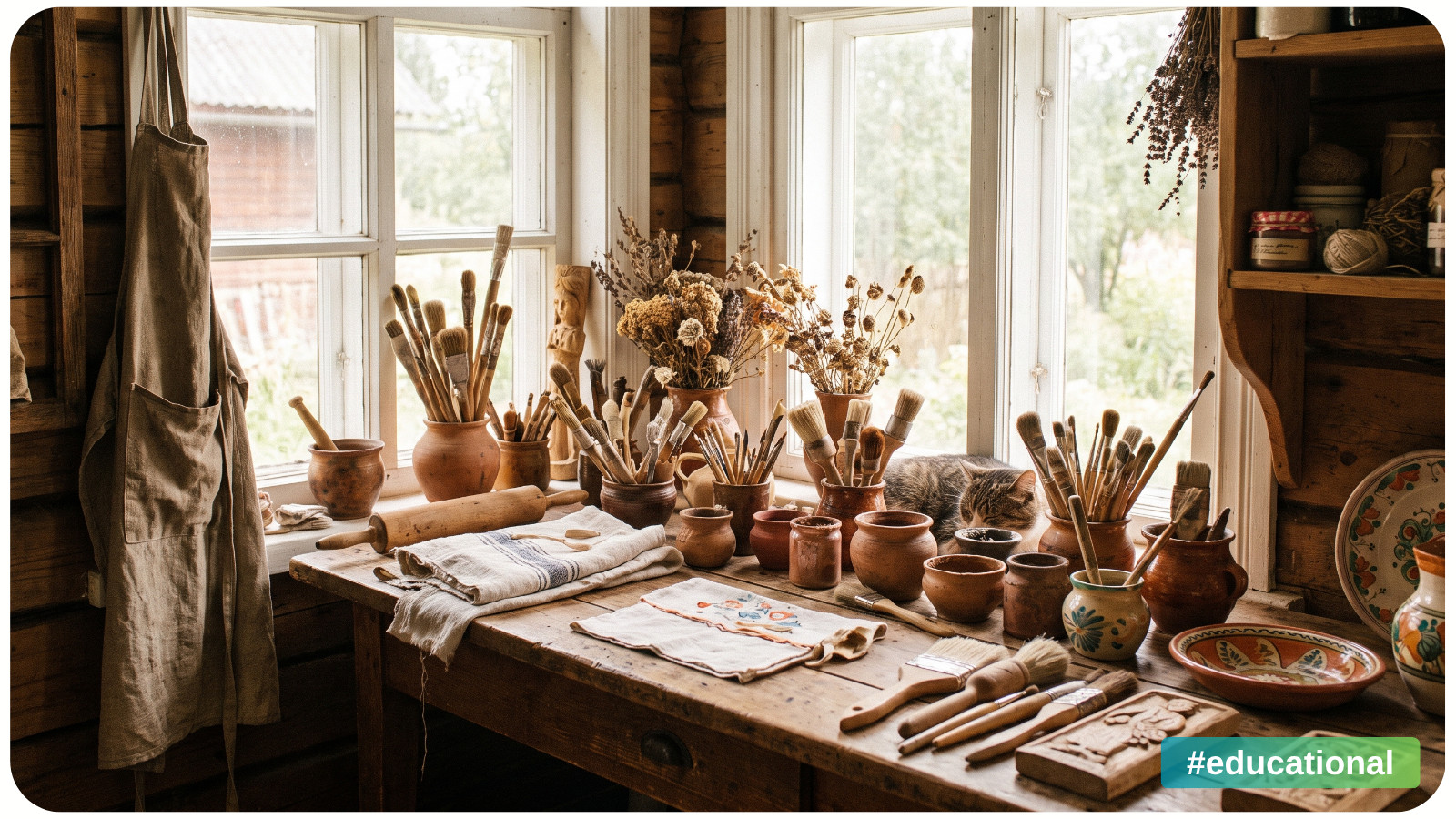
A painted flower on a Ukrainian household object, an embroidered quilt from Bengal, and a cut-paper decoration from China can all belong to the wide world of folk art. Yet they may share neither a material nor a color palette. What connects them?
Folk art is art rooted in the shared knowledge, customs, and everyday life of a community. It often combines personal creativity with skills learned from family members, neighbors, or other makers. Painting, embroidery, pottery, carving, and paper cutting can all be part of it.
Folk art looks different around the world because communities have different materials, needs, beliefs, histories, and ways of teaching. To understand those differences, it helps to look beyond the pattern and ask who made an object, how it was used, and what mattered to its maker.
What Makes Something Folk Art?
There is no single definition that covers every use of the term. For this article, the most useful starting point is its connection to community life. The National Endowment for the Arts describes folk and traditional arts through those community roots and the ways people pass on their knowledge.
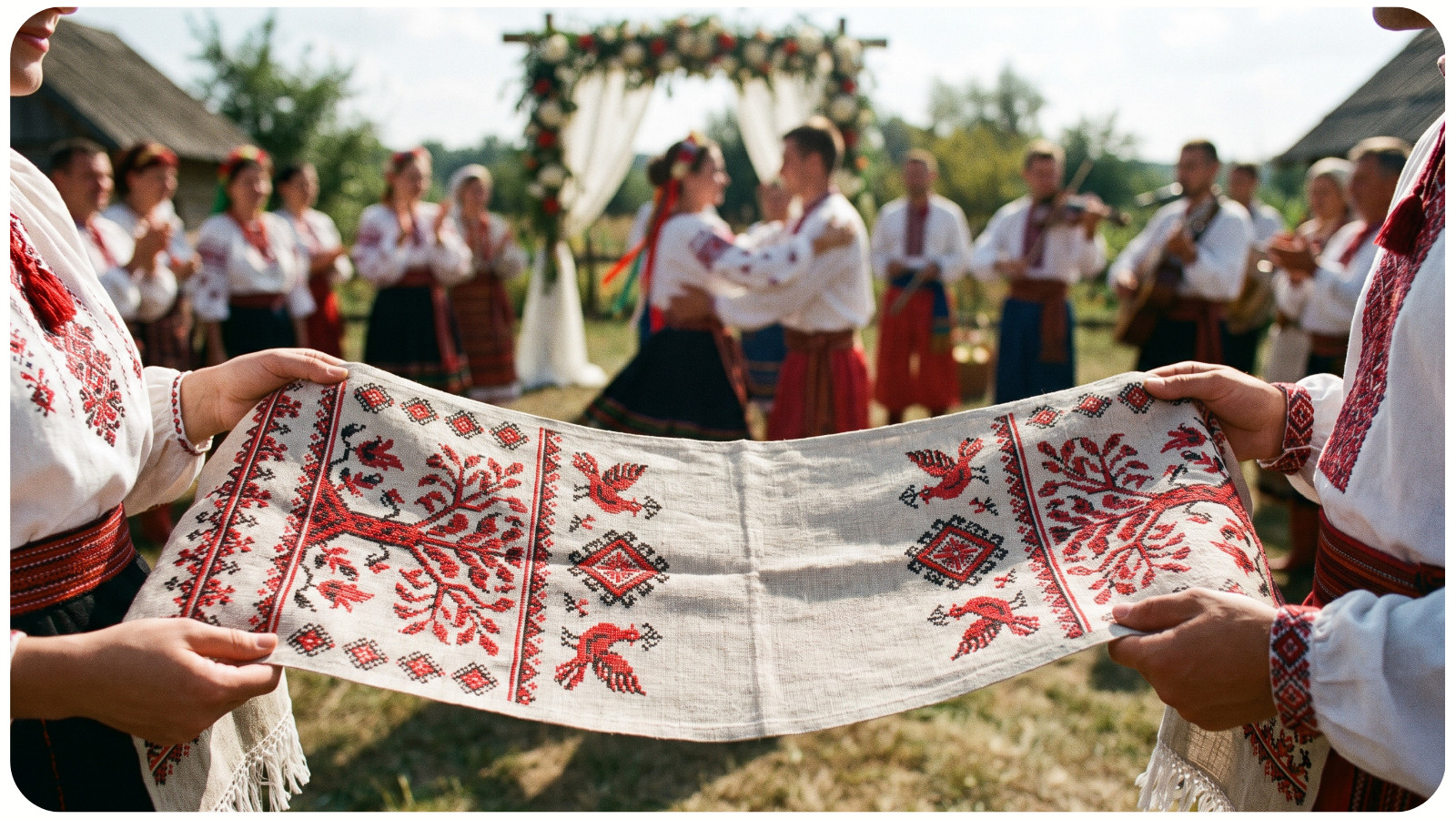
An object may have a practical role, such as keeping someone warm. It may mark a wedding, express religious belief, decorate a home, or tell a story. Usefulness and beauty can belong to the same object.
Nor does folk art mean that its maker has no training. Learning through years of observation, practice, and guidance is still learning. A person can work outside an art academy and possess deep knowledge of a demanding craft.
The labels also overlap. Museums sometimes discuss folk art alongside self-taught art, but the terms emphasize different things: a connection to shared traditions, or a route of learning outside formal art schools. Neither label tells us everything about an artist.
Common Folk Art Characteristics: Clues, Not Rules
Repeated flowers, birds, geometric shapes, strong outlines, and balanced arrangements appear in many objects described as folk art. These features can make a design readable across a room or help organize a decorated surface.
But bright colors and simple shapes are not a reliable definition. The embroidered cloths of Bengal, for example, include pale, finely detailed work as well as bold geometric designs. The American Folk Art Museum also emphasizes individual expression within shared forms and traditions.
A useful distinction is between a folk-inspired look and an object made within a particular tradition. A new illustration can borrow floral shapes without sharing the original objects' purpose, teaching practices, or cultural setting.
Why Does Folk Art Look Different Around the World?
Four connected factors help explain these differences: materials, purpose, local knowledge, and the choices of individual makers. They offer a way to investigate an object without assuming that every community follows the same rules.
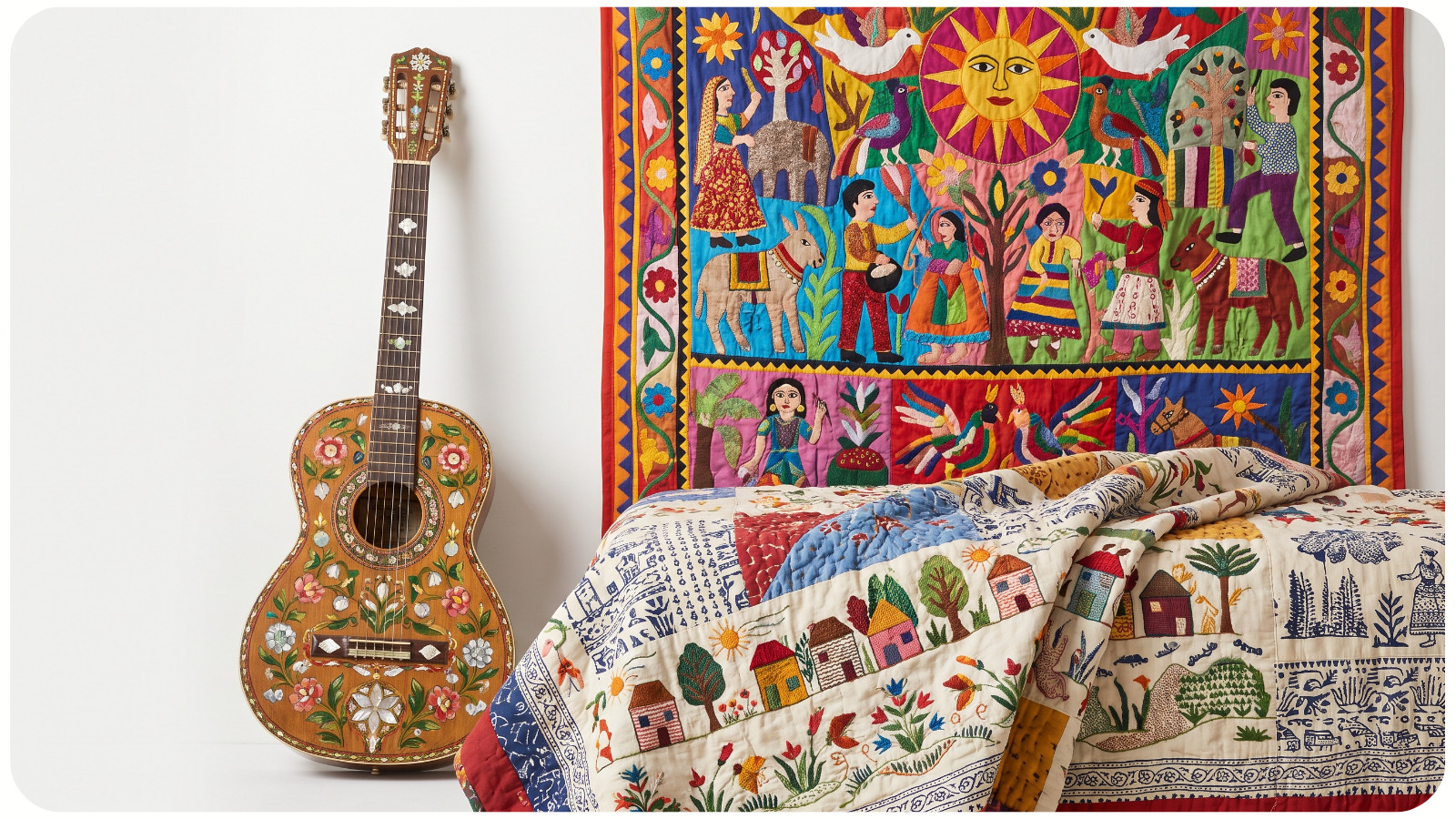
Materials and techniques shape the possibilities. Joining fabric pieces creates different opportunities from painting a surface or cutting openings in paper. A maker works with those limits and finds ways to use them creatively.
Purpose influences design. A bedcover, a decorated instrument, and a festival banner have different jobs. Their patterns need to work on different surfaces, at different sizes, and in different settings.
Local knowledge gives images meaning. A flower or bird may refer to the natural world, a story, a belief, or the maker's own interests. The same shape does not automatically carry the same message everywhere.
People preserve and change traditions. Makers learn from others, then make choices of their own. New fabrics, tools, audiences, and experiences can become part of a tradition's history.
Five Examples of Folk Art Around the World
These examples offer a starting point for comparison. Each belongs to a specific place or community, and none represents everything made within a country.
Petrykivka Painting in Ukraine: Flowers on Everyday Surfaces
Petrykivka painting takes its name from Petrykivka, Ukraine. UNESCO describes its use on homes, household belongings, and musical instruments, with imagined flowers and other forms drawn from nature.
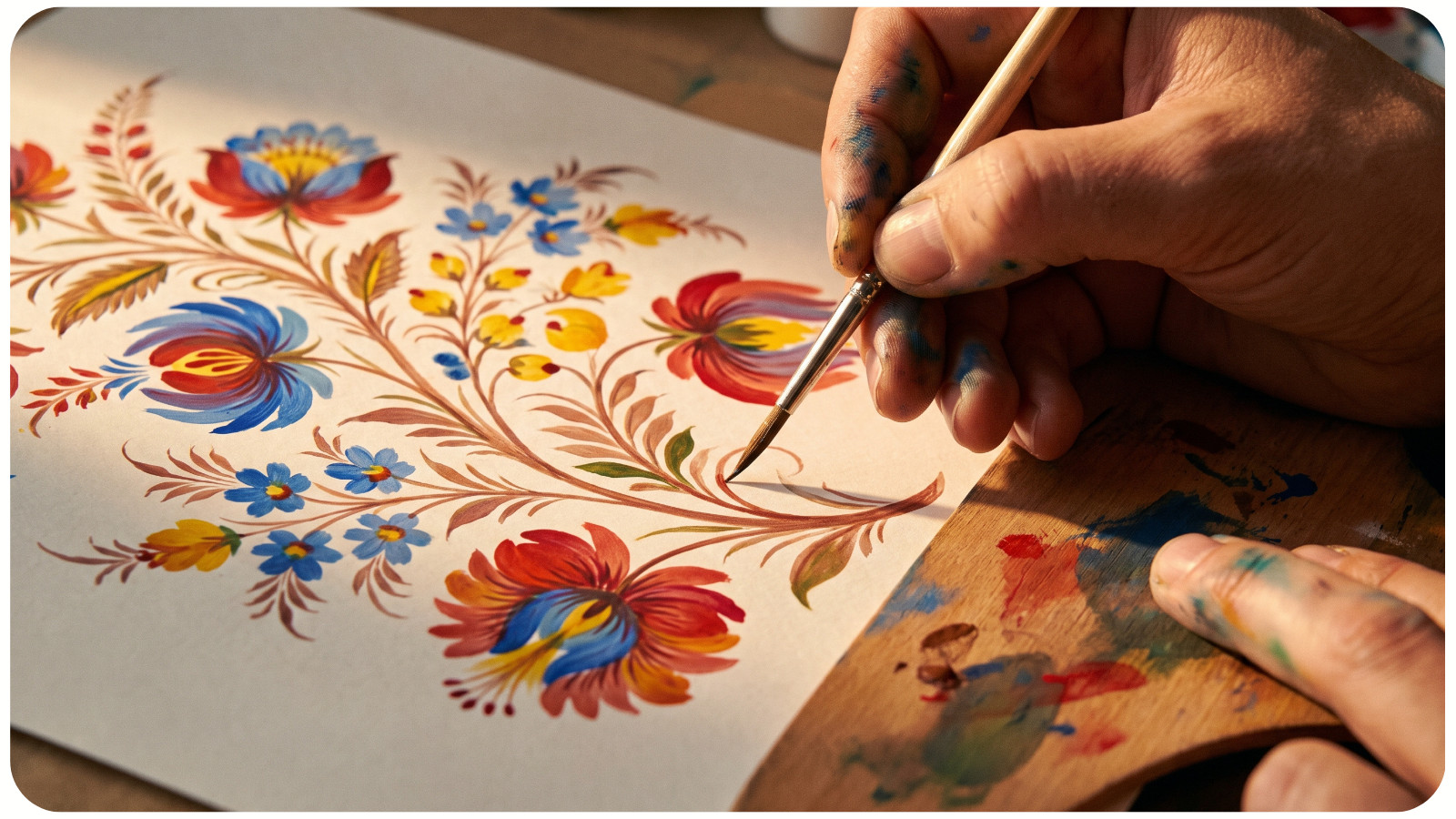
Think about how a painted plant can organize a surface: a stem gives the eye a path, while leaves and blossoms branch away from it. This offers one way to look closely at the relationship between ornament and the object beneath it.
The tradition also involves teaching. UNESCO's account of Petrykivka painting describes learning within the community and in local schools. The flowers are the visible result of a practice that includes people, knowledge, and repeated work.
Kantha in Bengal: Cloth That Holds Daily Life
Kantha traditions belong to Bengal, a region that includes Bangladesh and the Indian state of West Bengal. Historical examples show how reused cloth could become a surface for rich embroidery.
In its exhibition of historical Bengali textiles, the Philadelphia Museum of Art compared delicate nakshi kanthas, or ornamented embroidered cloths, with heavier galicha kanthas featuring bold geometric designs. Some nakshi examples combine reused white cloth with running stitches that create a gently rippled surface. Galicha examples use cross-stitch embroidery on commercial fabric, with reused cloth for the backing. Imagery in the nakshi cloths ranges from daily activities to religious subjects.
This comparison challenges the idea that a region has one folk art style. Even related textile traditions can differ in weight, color, stitch, and imagery. The museum's exhibition on a century of kanthas makes those differences especially clear.
Gee's Bend Quilts in Alabama: Shared Skills, Individual Designs
The African American quiltmakers of Gee's Bend, also known as Boykin, Alabama, offer another example of community knowledge and personal invention working together.
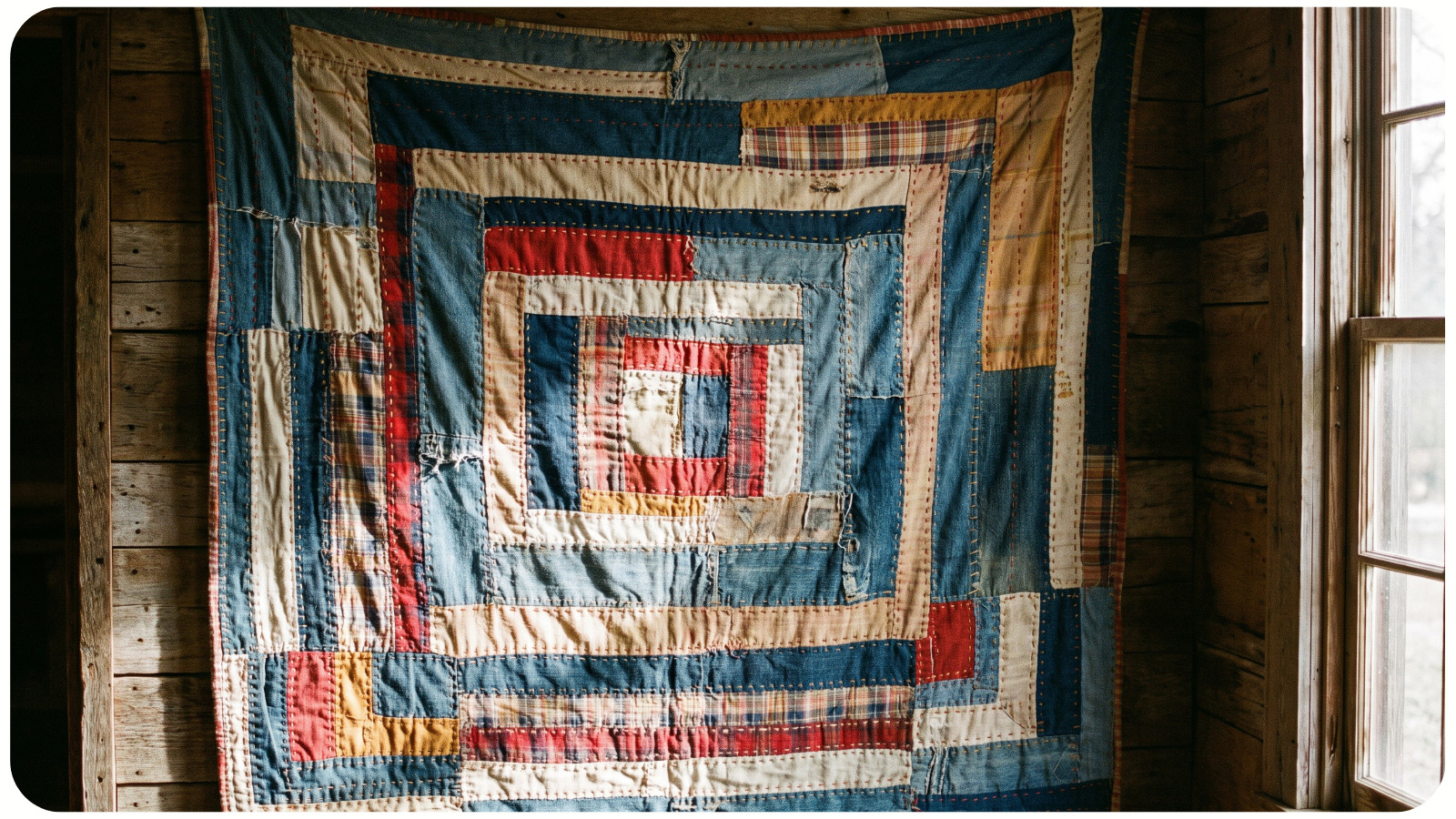
In an interview published by the National Endowment for the Arts, Mary Lee Bendolph and Lucy Mingo describe learning from their mothers and using cloth from worn clothing. Their accounts connect design to available materials, family needs, and pleasure in making.
Individual decisions matter, too. In Loretta Pettway's Medallion quilt, dated about 1960, three blocks have horizontal fabric strips and three have vertical strips. The Metropolitan Museum of Art's object record explains how that shift creates a lively visual rhythm. Shared skills leave plenty of room for a distinct artistic voice.
Chinese Paper Cutting: One Material, Many Local Styles
Chinese paper cutting shows how much variety can exist within a single medium. UNESCO documents differences in technique, regional style, and purpose, including decorations for windows and objects made for weddings, birthdays, and ceremonies.
Looking at a paper cut, notice both the remaining paper and the openings. The empty spaces help build the image just as much as the solid shapes.
UNESCO's description of Chinese paper cutting also notes that artists devise motifs of their own and increasingly use modern technologies. Tradition can provide a shared foundation while allowing new methods and personal choices.
Mexican Papel Picado: Cut Paper in a Different Setting
Mexican papel picado is another cut-paper tradition, often seen as delicate tissue-paper decorations. Smithsonian educational material documents its use on Día de los Muertos altars, which honor people who have died.
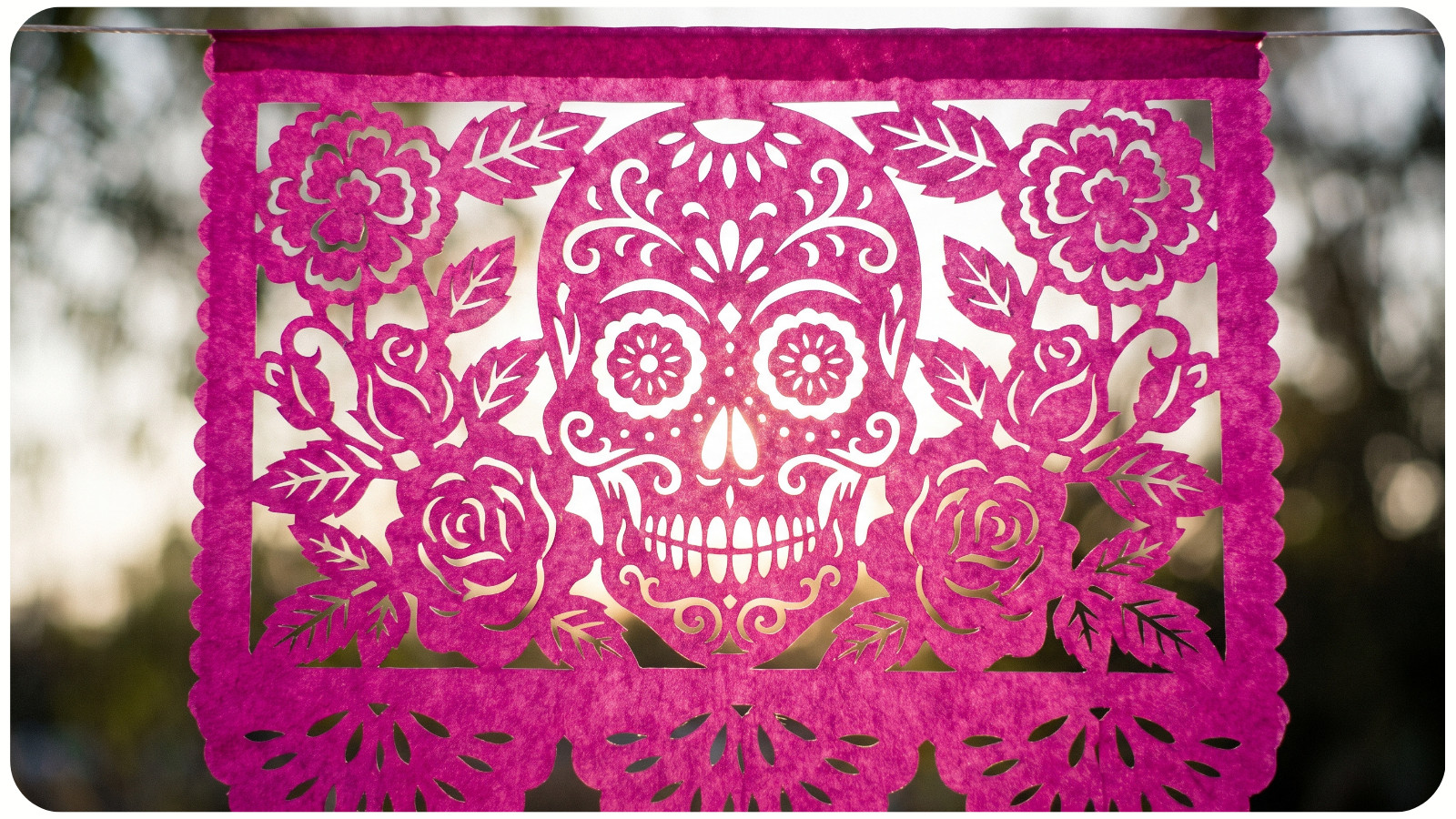
Placing it beside Chinese paper cutting offers a useful comparison: a shared material does not establish a shared meaning. To understand either example, we need its particular setting and use.
The tradition can also inspire new work. The Smithsonian American Art Museum describes how Daniel González drew on papel picado for a 2013 laser-cut screenprint celebrating a Los Angeles Día de los Muertos event. This is a documented connection between traditional paper cutting and a contemporary artwork.
How to Look at Folk Art Beyond the Pattern
When an object catches your eye, begin with a few questions:
• Who made it, and where? Look for a named artist, workshop, or community.
• What was it made for? Household use, celebration, devotion, and sale provide different contexts.
• How does the material affect the design? Follow the stitches, seams, brush marks, or cut edges.
• What is known about its meaning? Prefer the maker's account or a carefully researched museum record to a general list of symbols.
This approach also helps when two objects look similar. Repeated flowers or geometric shapes invite comparison, but resemblance alone does not prove that one tradition influenced another.
Folk art becomes more interesting as those details come into view. A quilt reveals choices about cloth and color. A paper cut shows how carefully openings were placed. A painted flower belongs to a surface, a maker, and a way of learning. The differences around the world are part of the story: they show how shared knowledge takes shape in individual hands.
Related Reading on Art and Handmade Traditions
Explore the stories behind handmade objects, develop your eye in a museum, or try a separate paper craft activity: