


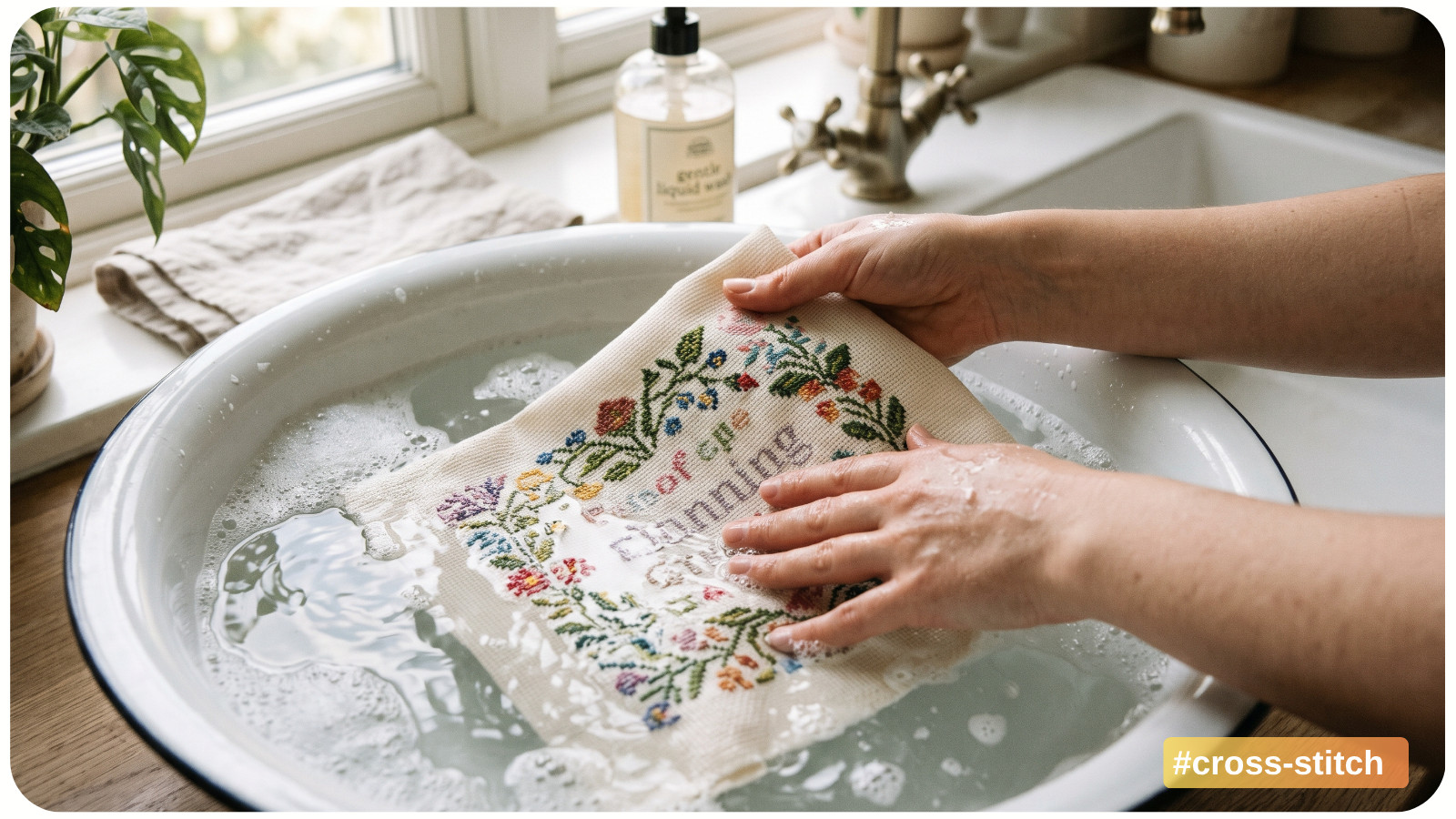
The last stitch is in, but your project may still have a faint hoop ring, a few handling marks, or a grid to remove. Should it go straight into the wash before you frame it?
Wash a finished cross-stitch project when it needs cleaning or washable markings need removing, and only when every material can tolerate the process. Do any necessary washing before final pressing and framing. A clean piece with no removable markings may not need washing at all.
Start with the fabric, threads, and any decorations. A care label for one component cannot tell you whether the whole piece is washable.
Does Every Finished Cross-Stitch Project Need Washing?
No. Washing is an optional finishing step when the piece needs cleaning and its materials allow it. DMC's needlework care guidance explains that some pieces never need washing, particularly when they have been kept clean during stitching.
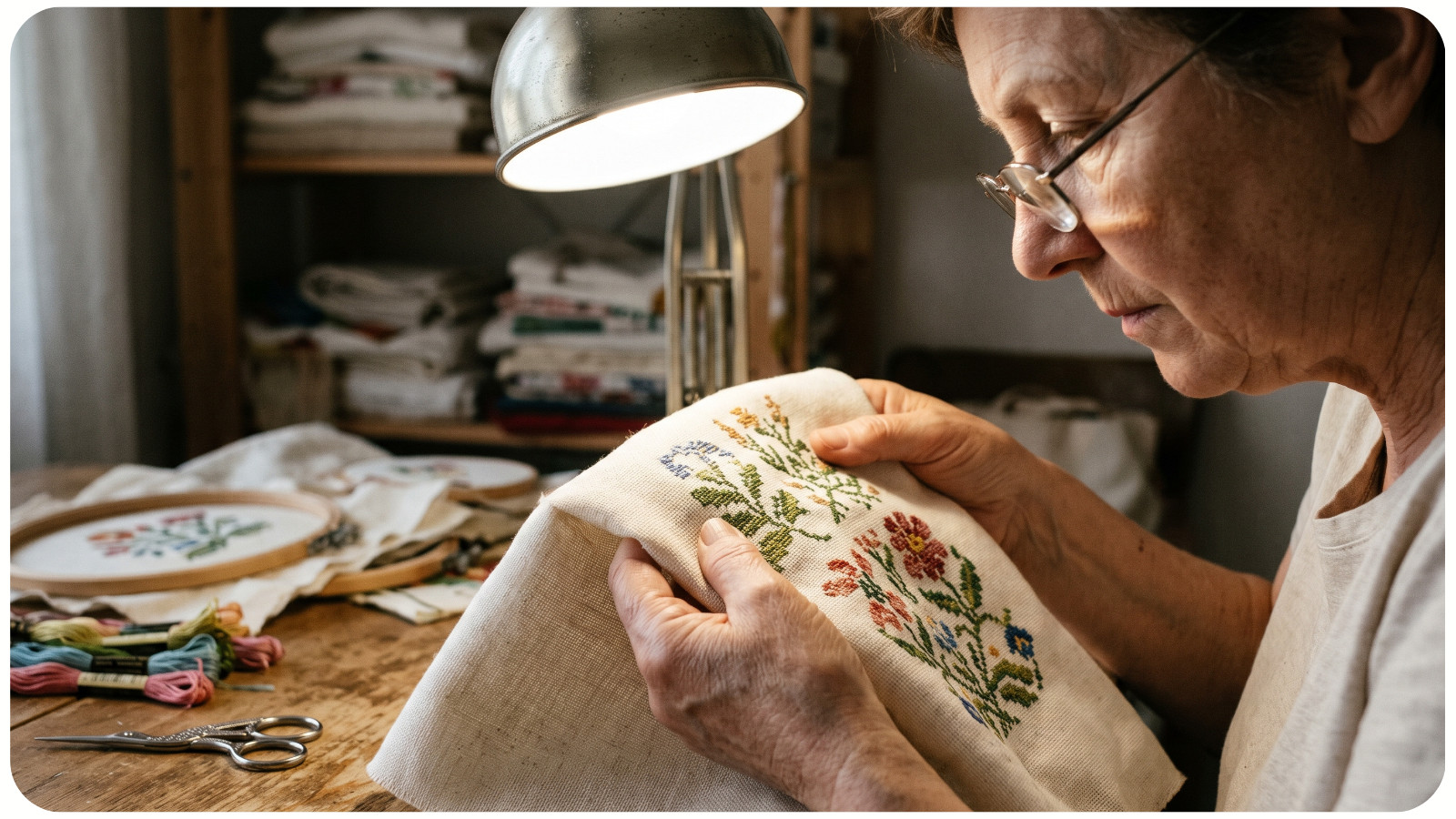
However, clean-looking fabric can still pick up oils from your hands. A gentle wash may be useful after frequent handling, provided the materials are washable. Check the edges you held, the hoop area, and the pale sections of fabric in good light.
Ask two questions: Does this piece need cleaning? Can all its materials tolerate the same cleaning method? If the care instructions conflict, pause and ask the suppliers before washing. For future projects, our guide to keeping embroidery clean and dust-free covers useful prevention habits.
When Washing Cross Stitch Makes Sense
There Are Handling Marks or Dirt
A gray edge, a dirty hoop ring, or a small mark is a reason to assess cleaning before you finish the piece. Yarn Tree's cross-stitch cleaning guide recommends checking that all materials are water-safe and examining stains before ironing, which can make them harder to remove.
A crease alone is different from a dirty ring. Do not scrub the stitch area simply because the fabric has held the shape of a hoop.
You Need to Remove a Water-Soluble Grid
If you used a washable fabric marker, follow that exact product's removal instructions. Clover notes that its water-soluble markers belong on washable fabrics and that marks left for a long time can become harder to remove.
Do not assume every grid disappears in cold water. For example, Zweigart’s Easy Count Grid Aida instructions specify a 30-minute machine wash at 40°C (104°F) with detergent for delicates. That is a product-specific removal method, not a general rule for finished cross stitch.
Check the instructions supplied with your exact fabric. If its grid-removal method conflicts with the threads or decorations, do not simply increase the heat or wash time. Ask the suppliers for a compatible approach. A quick cold rinse may leave that type of grid behind.
Remove markings as directed before pressing. For example, Clover says marks from its Chacopen Blue can reappear with ironing after eraser removal; water removal is needed. That detail should not be turned into a rule for every pen.
You Are Preparing a Washable Piece for Framing
If cleaning is needed, plan it while the embroidery is still a separate piece of fabric. Washing becomes a more complicated decision after you add backing, glue, stuffing, or other finishing materials.
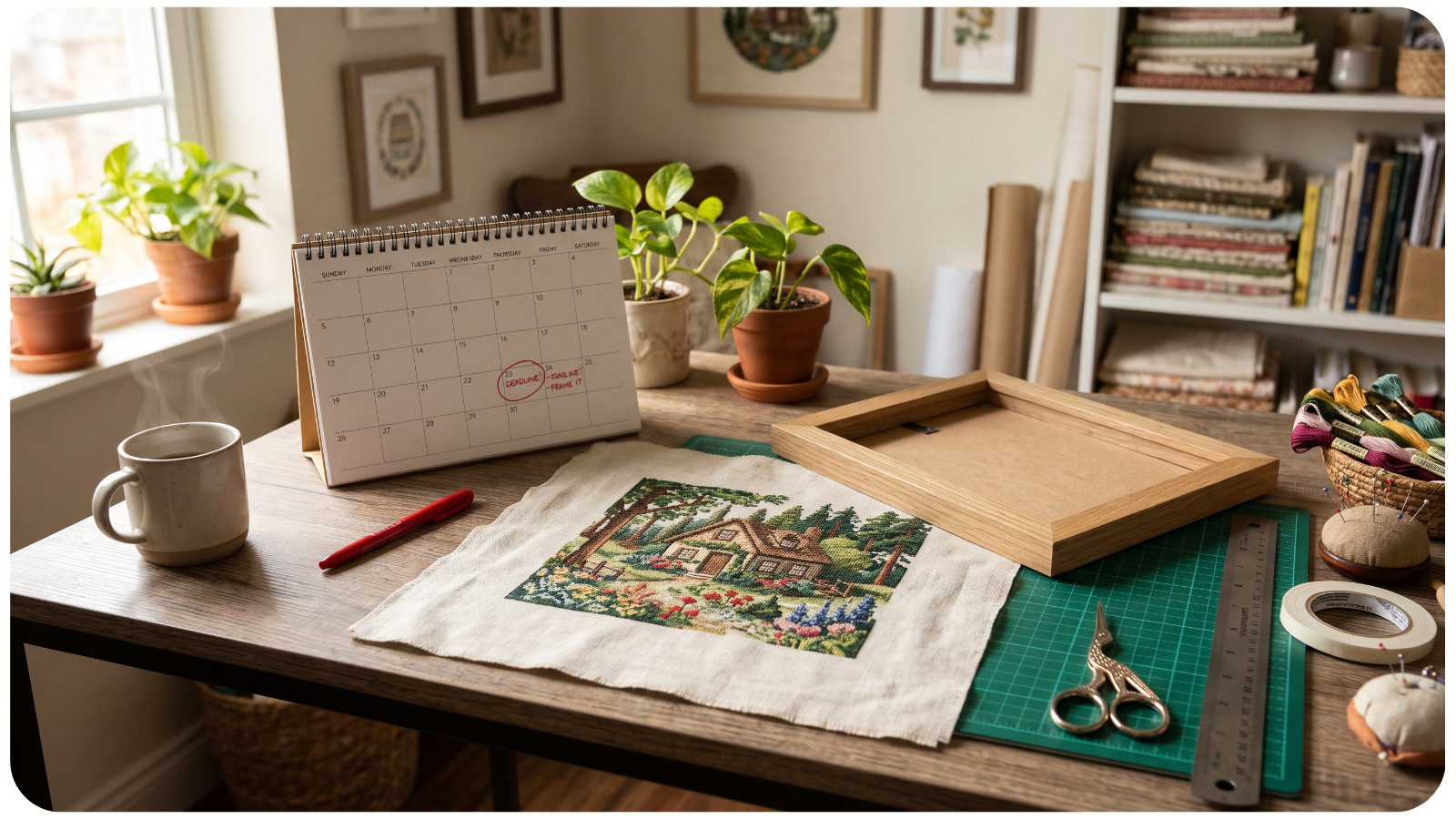
A useful order is: check the stitching, remove washable markings according to their instructions, wash if needed, dry and press as permitted, then finish. Mark removal and washing may be part of the same process. Allow drying time before your framing appointment or gift deadline.
When Not to Wash Finished Cross Stitch
Hand-Dyed Threads or Fabric Have Uncertain Care Instructions
“Hand-dyed” does not automatically mean unwashable. It also does not guarantee that the dye will stay put. The Gentle Art describes its thread ranges as colorfast but still acknowledges the possibility of residual surface dye.
Check the exact thread range and fabric supplier's instructions. A washable cotton thread does not make an unknown hand-dyed background washable. If a maker advises against washing, do not let general cross-stitch advice override that instruction.
The Design Includes Specialty Materials
Silk, wool, metallic threads, beads, and charms need their own care checks. Some can tolerate water; others require a different approach. Use the care requirements of the most sensitive component.
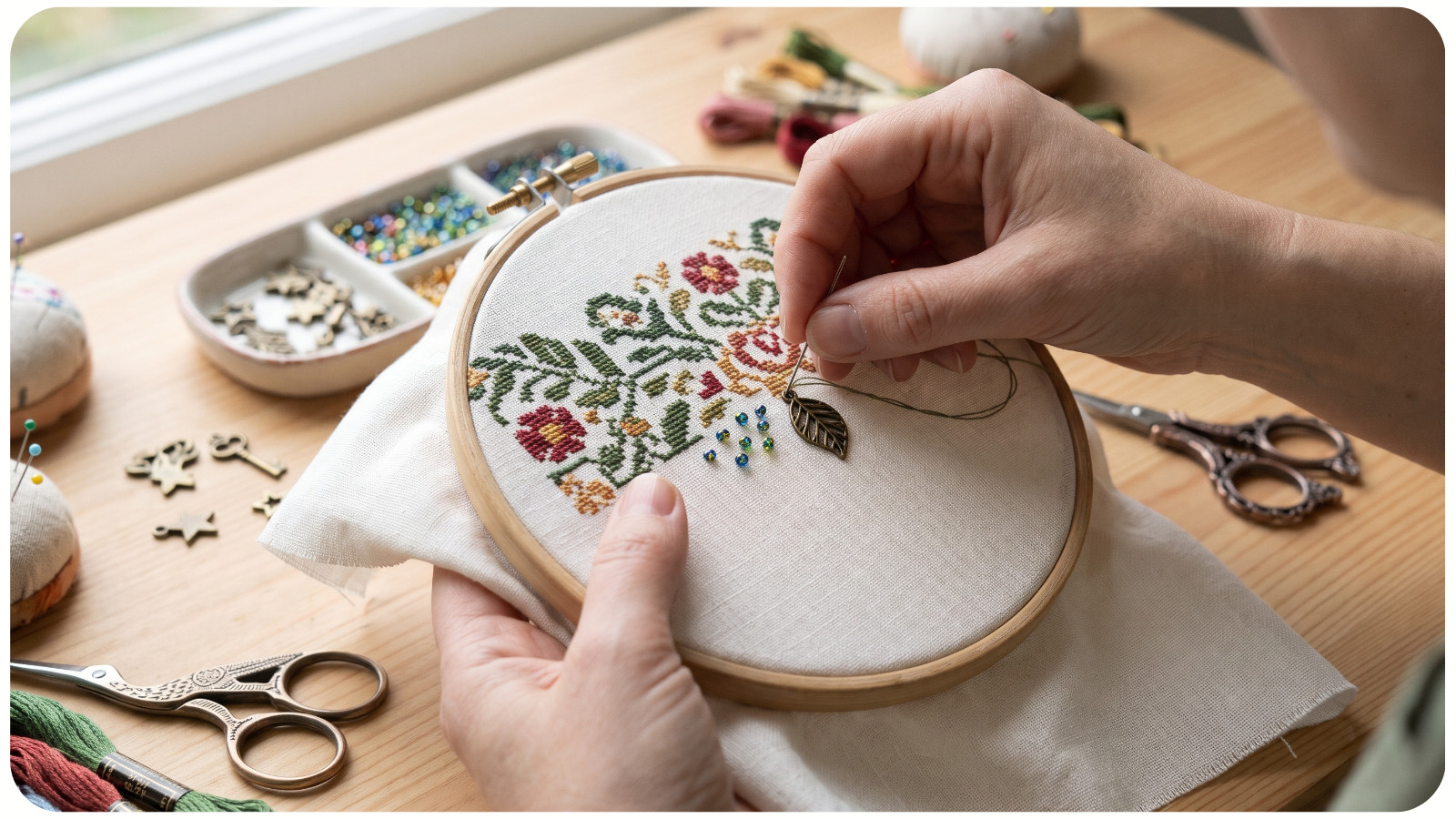
When planning a new piece, consider whether delicate decorations should be attached after any required washing. If they are already attached and their care is unknown, ask the supplier before soaking.
The Piece Is Antique, Fragile, or of Unknown Origin
A new cotton project and an inherited sampler need different decisions. The Canadian Conservation Institute advises seeking a textile conservator for special textiles and warns that cleaning depends on condition.
Do not use a household washing routine on an old sampler with brittle fabric, loose threads, or unknown dyes. A stain may be less damaging than an unsuitable attempt to remove it.
Check Colorfastness Before You Commit
Colorfastness means resistance to color loss or transfer under particular conditions. A label is useful, but the complete piece still contains fabric, thread, and possibly other colored materials.
For a modern project, use leftover threads and fabric to make a small stitched sample if possible. Use the planned water temperature and detergent dilution, checking the sample with plain water first and then with the intended cleaning solution. Stop if color moves. Look for dye moving onto adjacent pale fabric or clean white cotton, and inspect the sample after drying.
This is a practical screening check, not a guarantee. The Canadian Conservation Institute's colorfastness guidance explains that even tested dyes can run unexpectedly. Testing only with water also does not establish how a dye will behave with detergent.
For a future project, test before stitching the full design. Our guide to choosing embroidery fabric also explains why a stitched sample is useful.
If a sample releases color, do not immerse the finished embroidery. If you have no scraps and no reliable care information, ask the supplier rather than treating the finished piece as your first experiment.
How to Wash Finished Cross Stitch Before Framing
Use this routine only for a modern, unmounted piece whose fabric, threads, and decorations allow cold handwashing. It is not a substitute for the special grid-removal instructions discussed above.
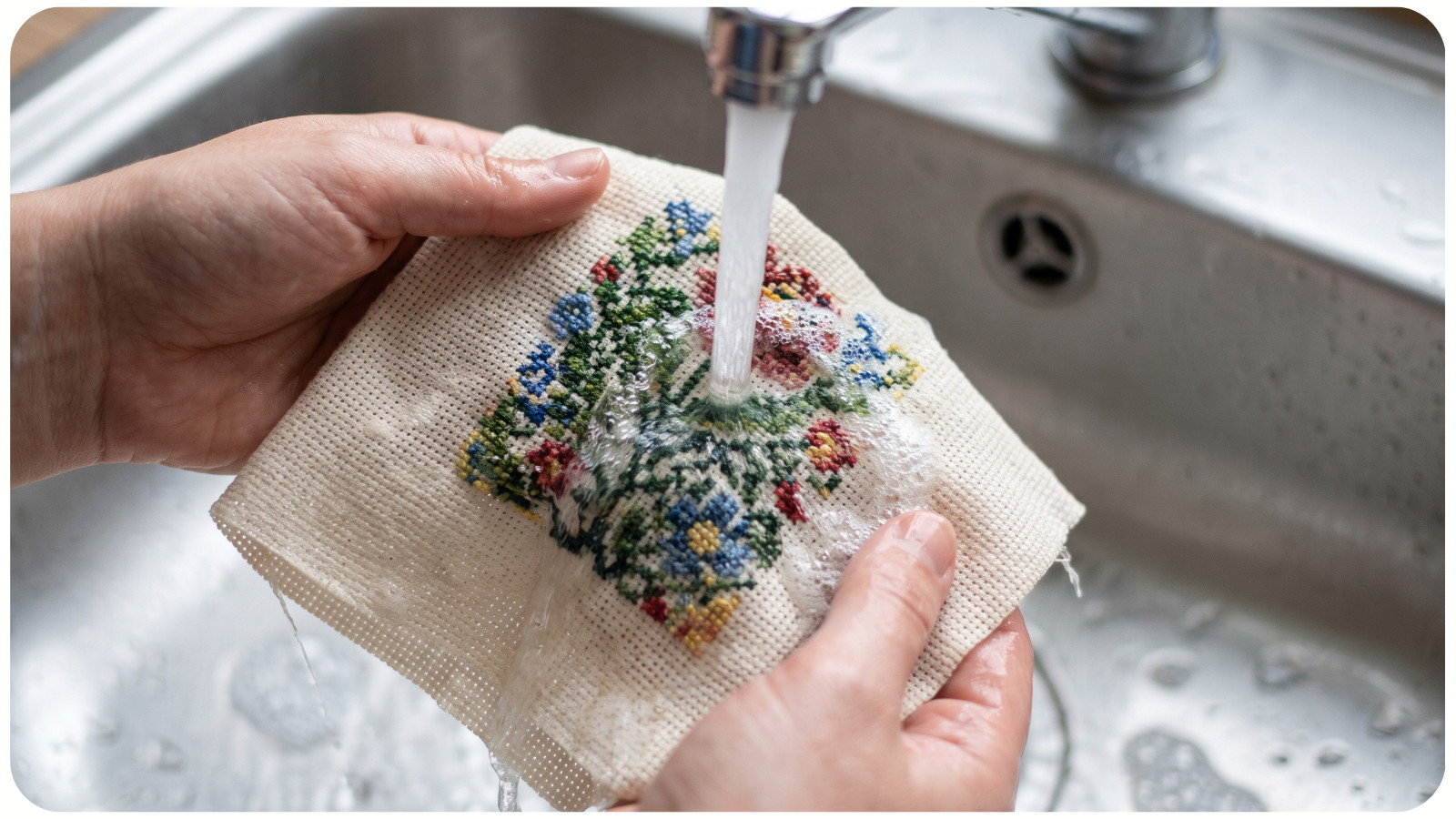
1. Prepare the piece. Remove the needle, hoop, and detachable accessories. Check for loose ends and missed stitches.
2. Use a clean basin and cold water. Wash the project separately. Pre-rinse gently, then add a small amount of mild detergent suitable for the materials. DMC recommends a non-biological detergent, meaning one without enzymes. Avoid bleach.
3. Wash gently by hand. Support the fabric and avoid rubbing or twisting. Do not leave it soaking unattended.
4. Rinse thoroughly in fresh cold water. Remove detergent residue and keep watching for color movement.
5. Blot out excess water. Place the piece between clean towels and press or roll gently. Never wring it.
6. Dry flat. Keep the fabric supported, and do not forcefully stretch it back into shape.
These steps follow the gentle approach described by DMC and Yarn Tree. Neither a stronger detergent nor harder scrubbing is a sensible next step when a mark remains.
What If the Colors Start Running?
Stop the detergent wash. For its own threads, The Caron Collection advises immediate rinsing in several changes of cool to lukewarm water without soap if bleeding occurs in finished embroidery.
Use the thread maker's instructions for your materials. Do not add salt or vinegar as a universal dye fix. Caron specifically explains that these do not fix the colorfastness of its fiber-reactive dyes.
Avoid heat while dye transfer remains unresolved, and seek specialist help if color has spread into the background. There is no home method that can promise to reverse every dye stain.
Dry, Check, and Finish
Before pressing, inspect the project again for remaining stains and grid lines. For a piece that permits ironing, support the stitches face down on a clean towel and use a protective cloth. Follow the lowest heat limit required by any component. Do not assume steam is suitable for unknown dyes or specialty threads.
Let the embroidery dry completely before mounting or storing it. Conservation guidance also stresses keeping stored textiles clean and dry. Once the care steps are complete, explore these ways to display finished cross stitch for ideas that suit your piece.
For your next finish, use this simple routine: check whether cleaning is needed, confirm every material's care instructions, and wash only when both the need and the method are clear. That is a better guide than washing every finished cross-stitch project by habit.